Let's talk about the plot twist your cycle brings
Here's something most people never mention: your body doesn't want the same thing every day of your cycle. Around ovulation, when estrogen peaks and testosterone spikes, your desire amplifies, your sensitivity increases, and orgasms come faster and stronger. This isn't psychology. It's neurobiology.
Most couples either ignore this pattern entirely or accidentally sabotage it by treating every day the same way. The good news is that timing intimacy with your ovulation window, especially when you're using a tool like a lemon vibrator, can transform both connection and pleasure.
What actually happens to your body during ovulation
About 12 to 16 days before your period, estrogen hits its peak. This surge tells your brain and body several important things. Blood flow to the genitals increases. Vaginal lubrication naturally improves. The clitoris becomes more engorged and responsive. Sensory nerve endings fire faster. Oxytocin and dopamine (the bonding and pleasure chemicals) ramp up.
At the same time, testosterone rises. Yes, people with cycles produce testosterone, and it's a major driver of sexual desire and motivation. During this window, many people report feeling more confident, more sexual, and more interested in initiating.
This isn't universal, and it doesn't override consent or your actual mood. But physiologically, your body is literally built to want more pleasure during this phase. Fighting that is like swimming upstream.
Why a lemon vibrator works differently during your peak window
Clitoral suction toys like the Lem use gentle air-pulse stimulation instead of traditional vibration. During ovulation, when your clitoris is naturally more swollen and blood-rich, this suction method feels noticeably different. More powerful, faster to build arousal, easier to reach climax.
Many partners notice this shift too. If you've used a lemon clitoral vibrator before, you might have needed longer warm-up time or gentler intensity. During ovulation, you're likely to want higher patterns earlier and to orgasm with less total time spent building arousal.
This is important information to share with your partner. It's not that something changed about the toy. It's that your body is literally in a different neurological state. A lemon sucker that felt perfect on day 8 of your cycle might feel almost conservative on day 14.
How to talk about cycle timing without it feeling clinical
Many partners freeze up when they hear "I want to sync our sex life to my ovulation." It sounds like a spreadsheet. Here's how to frame it so it actually lands.
Start with sensation, not scheduling. "I noticed I feel way more into it mid-cycle" is easier to hear than "We should have sex on day 14." Next, tie it to them. "Your touch feels more intense to me right now" or "I want you more during this window" shifts the conversation from your cycle to the shared experience.
Finally, make it about opportunity, not obligation. "I'm usually most in the mood around this time, so I wanted to let you know" gives permission without pressure. If your partner is worried about turning sex into a calendar event, the key is proving it's the opposite. You're trying to make it more spontaneous and pleasurable, not more scheduled.

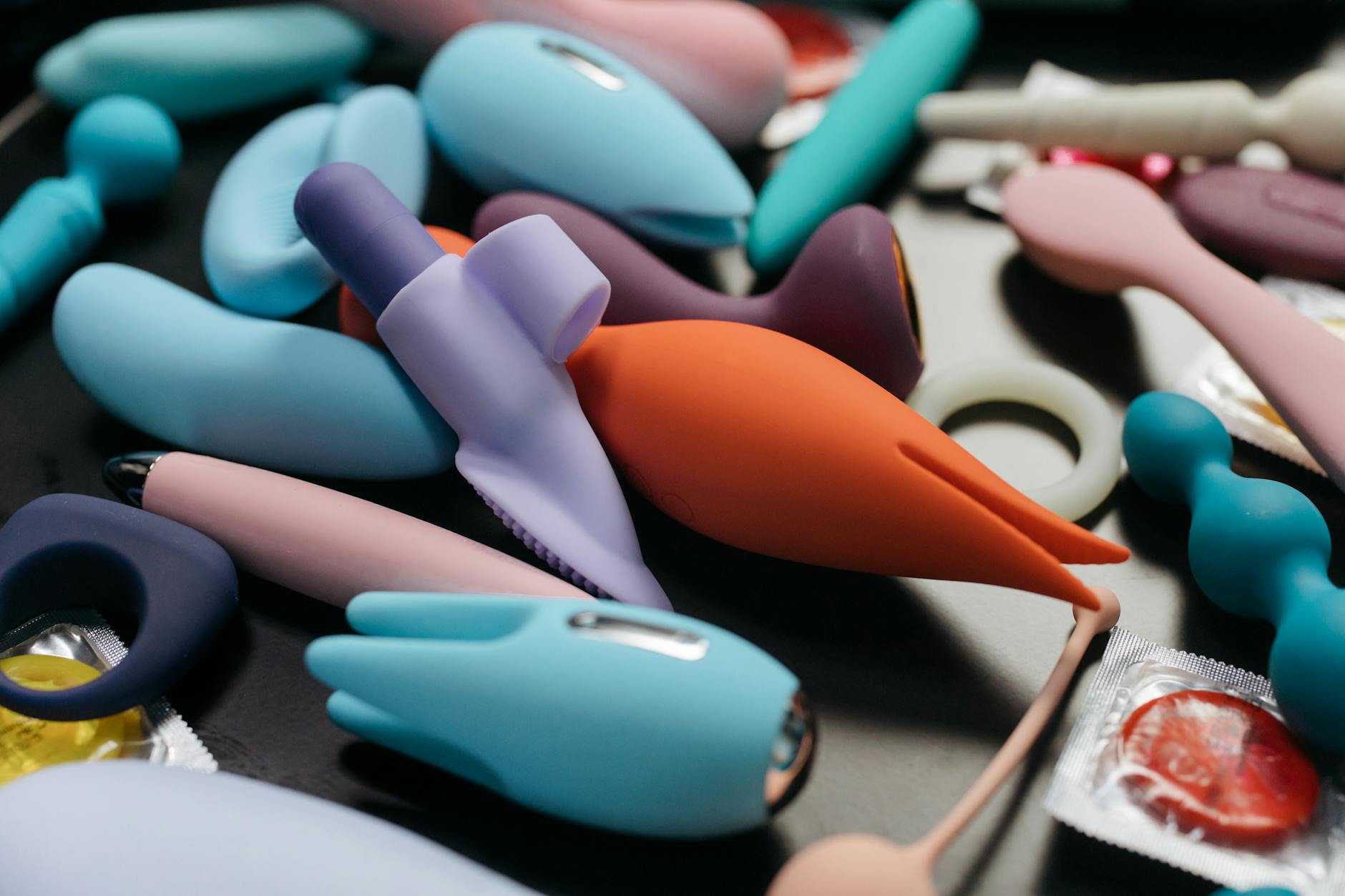
Photo by Hanna Brovko on Pexels
The exact timing window and what it means
Your fertile window is roughly days 12 to 16 of a 28-day cycle, counting from day 1 of your period. Ovulation itself happens around day 14, but the real pleasure window starts a few days before and extends a few days after.
Here's what to expect each phase. Three to four days before ovulation, desire starts ramping up and lubrication increases. This is your opening. Two days before and the day of ovulation, sensitivity is at its absolute peak. This is when using a lemon vibrator with your partner will feel most intense. For two to three days after ovulation, you're still in the sweet spot, though the sensation begins to soften slightly.
The whole window is about eight days total. You don't need to plan something every single day. But knowing this window exists means you can be intentional about when you bring out tools and extra attention.
Practical steps for using a lemon clitoral vibrator with your partner during this phase
Start by making sure you both know it's coming. "I'm in my high-desire phase" or "My body feels really good right now" is enough. No need for charts or apps waved in anyone's face.
Warm up together first. During ovulation, foreplay can be shorter because arousal comes faster. But starting with touch, kissing, and connection still matters. It sets the tone and gets both of you mentally present.
Introduce the lemon vibrator during partner stimulation, not as a replacement for it. Your partner can hold it, you can hold it, or you can take turns. The key is that it stays collaborative. This isn't about outsourcing pleasure. It's about amplifying what's already happening between you.
Start on a lower pattern. Even though your body is more responsive, jumping to pattern 3 or 4 immediately can actually delay orgasm because the intensity is almost too much too fast. Let sensation build. You'll know when to dial up the intensity.
Pay attention to what your partner is doing with their hands, mouth, or body while the vibrator is working. During ovulation, many people report that the combination of clitoral suction from the lemon vibrator plus partnered touch (inside or outside) creates much stronger orgasms than either alone.
What to do if the timing doesn't sync with your relationship rhythm
Not everyone's schedule lines up with their cycle. Work trips happen. Mismatched libidos exist. Someone's stressed. Here's the honest part: ovulation amplifies desire and sensation, but it doesn't create them from nothing.
If your partner isn't interested during your peak window, it's not because the window is wrong. It's about other things. Those are separate conversations. What you can do is plan ahead when possible. "I know we're both swamped next week, but I'm going to be really into it over the weekend" gives your partner a heads-up without pressure.
If you're single or partnered with someone who doesn't have a cycle, you still benefit from syncing with your own. Masturbating with a lemon vibrator during ovulation often feels different, better, more satisfying. The window exists for your pleasure too, not just for partnered sex.
The communication piece nobody mentions
Using a lemon sucker with a partner during ovulation can feel vulnerable. You're more sexual, more vocal, more responsive. Some people worry they'll seem too eager or too into it. That worry is worth naming beforehand.
A simple check-in helps. "I'm going to be more into it during this phase, and I want you to know that's normal for my body" is permission to be more yourself. If your partner responds with enthusiasm, you're good. If they seem hesitant, that's useful information about what you need to talk about separately.
The best partnerships find ways to honor both people's cycles and needs. During your peak window, your body is literally asking for pleasure. Showing up for that together is one of the most connecting things a couple can do.
People also ask
Can I use a lemon vibrator during ovulation if I have painful ovulation?
If you experience mittelschmerz (painful ovulation), a lemon vibrator can actually feel soothing. The gentle suction and circulation it brings to the area may ease cramping for some people. That said, if ovulation pain is severe, check with your doctor before adding vibration. Sometimes pain signals something worth investigating. Once you're cleared, a lemon clitoral vibrator on a lower pattern might be exactly what your body needs.
Does using a lemon vibrator during ovulation increase the chance of pregnancy?
No. Clitoral stimulation doesn't affect your fertility status. If you're actively trying to conceive, you might time intercourse with your fertile window for timing reasons, but the vibrator itself doesn't influence pregnancy outcomes. If you're trying to avoid pregnancy, remember that ovulation is when conception risk is highest, so use whatever contraception is right for you regardless of vibrator use.
Why does my lemon vibrator feel uncomfortable during ovulation sometimes?
During ovulation, increased blood flow can sometimes make the clitoris feel almost overly sensitive. If the sensation goes from pleasurable to uncomfortable, it usually means you're starting on too high a pattern. Drop to pattern 1 or 2, let sensation build longer, and see if comfort returns. Some people also find that lubrication (even during a naturally high-lubrication phase) makes a difference. Try a water-based lube and adjust from there.
What if my partner feels threatened by me wanting a lemon vibrator during ovulation?
This often points to a deeper insecurity about whether you still want them, or whether pleasure requires tools now. The conversation to have is separate from the vibrator itself. "Using this amplifies what we do together, not replaces it" is honest. "I want you more during this phase" is true and worth repeating. If your partner continues to feel threatened, that's a relationship issue worth exploring with support, possibly from a couples counselor or coach.
Can I use a lemon vibrator during ovulation if I'm on hormonal birth control?
Yes. Hormonal contraception suppresses ovulation but doesn't eliminate the hormonal fluctuations that come with your cycle. You'll still experience phases where you feel more or less sexual, and your body will still appreciate a lemon clitoral vibrator. The window might be slightly different or less pronounced on certain pills, but the principle holds. Track what you notice and plan from there.
Is it normal to want more during ovulation but less during other phases?
Completely normal. Desire isn't supposed to be flat across your cycle. Testosterone and estrogen fluctuate, and so does your brain's response to stimulation. Many people are highly sexual during ovulation and less interested during the luteal phase. Some are the reverse. Your pattern is yours. Honoring it, and having a partner who understands it, changes everything.
The bigger picture
Using a lemon vibrator with your partner during ovulation isn't about turning sex into biology. It's about working with your body instead of ignoring it. Your cycle gives you a window where pleasure comes easier, desire feels stronger, and connection deepens faster. That's a gift. Most couples never think about it, which means most couples leave this window untouched.
If you're curious about what this timing could feel like for you, start by simply noticing. Track when you feel most into it. Watch how your body responds to a lemon clitoral vibrator at different times in your cycle. Talk to your partner about what you discover. The science is on your side. Your body wants this. The rest is just showing up.
Ready to explore? Check out how to talk about lemon vibrators with your partner for deeper conversation frameworks, or revisit why lemon clitoral vibrators feel better than standard vibration for sensitive bodies to understand the neuroscience behind what you'll feel. If timing feels tricky in your relationship, using a lemon vibrator when desire feels mismatched or low walks through how to bridge gaps.
Your pleasure matters. Your cycle is part of that story. Make it count.