
Here's the thing about sensitive tissue and standard vibrators
Most vibrators buzz. They vibrate at frequencies between 50 and 150 Hz, which means they create rapid, repetitive contact with the same spot over and over. For some bodies, that's perfect. For others, especially people with sensitive clitoral tissue, nerve damage, or reduced sensation from medication or age, that rapid mechanical stimulation can feel irritating, overwhelming, or even numb.
Lemon vibrators work differently. They use air-pulse technology, which creates a gentle suction sensation instead of direct vibration. This matters more than it sounds.
How air-pulse suction actually feels different
When you use a traditional vibrator, you're feeling mechanical oscillation against your skin. The clitoris has roughly 8,000 nerve endings, and standard vibration stimulates all of them at once with the same rhythmic pattern. This is intense, which works beautifully for some people and creates sensory overload for others.
Air-pulse technology, like what you get with a lemon vibrator, creates a gentle expanding and contracting sensation inside the air chamber. Instead of buzzing, it feels more like light suction. This stimulates the deeper nerve clusters around the clitoris without the constant mechanical pressure.
The practical difference: vibration is like tapping the same spot repeatedly. Suction is like gentle waves rolling in. One is high-frequency, high-pressure contact. The other is lower-frequency, broader stimulation.
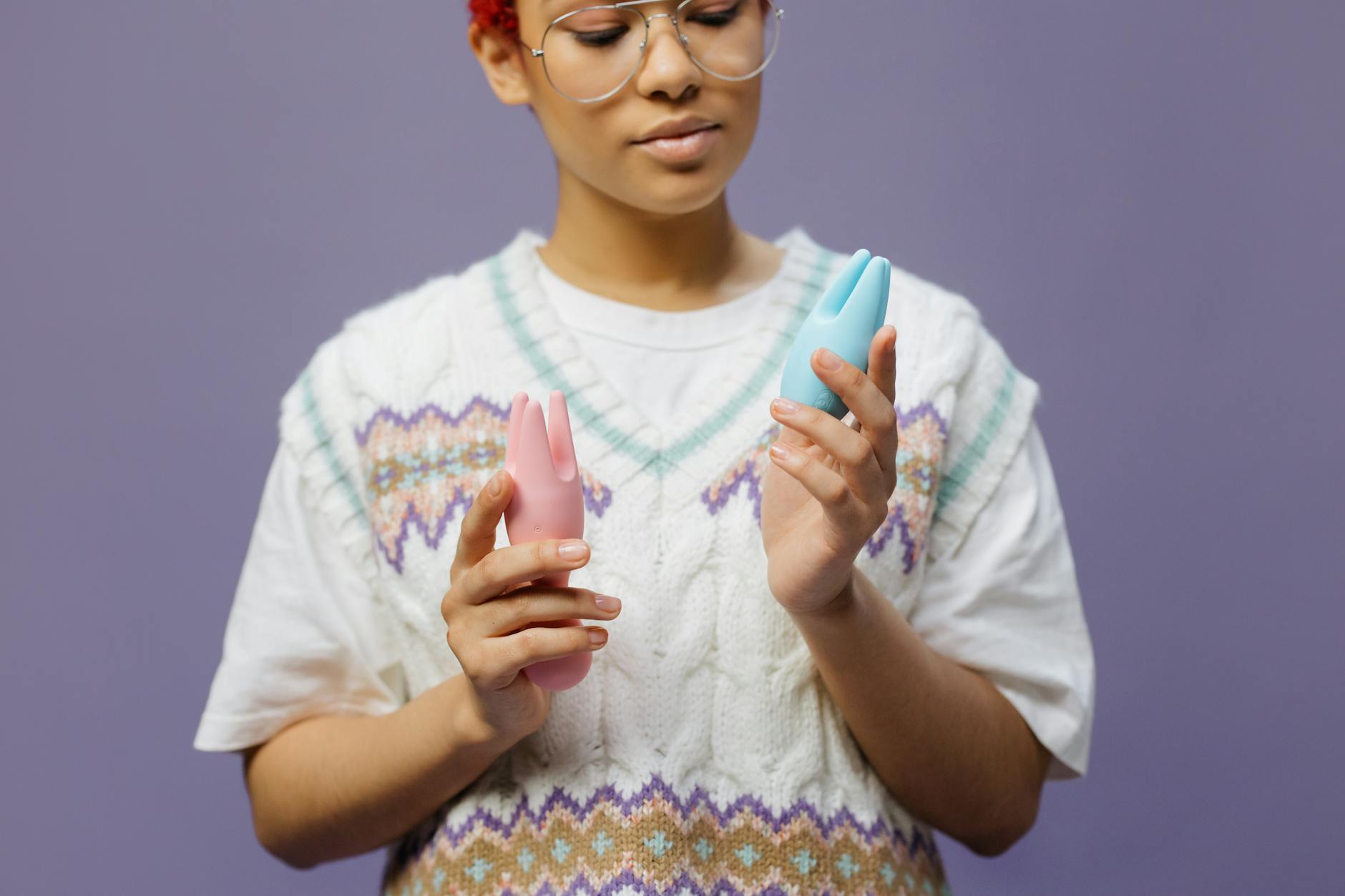
Photo by cottonbro studio on Pexels
Why this matters for sensitive bodies specifically
If your clitoris is sensitive, it usually means one of three things:
Too much direct pressure. Some people have hypersentive nerve endings that light up too quickly with intense vibration. A lemon vibrator's softer suction approach lets you dial in exactly the intensity you need without starting at "overwhelming."
Nerve damage or reduced sensation. If you've had spinal surgery, pelvic surgery, or certain medications affect your sensation, standard vibrators might feel numb and ineffective. Suction stimulates deeper nerve pathways differently than surface vibration, which often re-activates sensation where regular vibrators fall flat.
Tissue thinning or irritation. Thinning tissue from hormonal changes, post-pregnancy healing, or repeated friction sensitivity benefits from suction because it doesn't require the same kind of direct mechanical contact. You get stimulation without the rawness.
In each scenario, the lemon vibrator's approach works because it's fundamentally less abrasive while still being effective.
The nerve activation pattern is key
Neuroscience tells us that suction and vibration activate overlapping but distinct neural pathways. When you apply suction to the clitoris, you're activating mechanoreceptors called Pacinian corpuscles, which respond beautifully to pressure changes. You're also engaging Meissner's corpuscles, which respond to lighter touch.
Traditional vibration hits primarily the Pacinian corpuscles hard and fast. If your nervous system is already overstimulated or if those receptors are fatigued, the signal gets lost. Suction hits a broader spectrum of receptors at once, which means even if one pathway is tired, others are still lighting up.
For people on SSRIs or other medications that numb sensation, this cross-pathway stimulation is the difference between reaching orgasm and spending 30 minutes feeling nothing. The variety of stimulation matters more than pure intensity.
Why lemon vibrators work better after medication changes
Antidepressants, blood pressure meds, antihistamines, and even hormonal birth control can flatten sensation. When sensation is dampened, your instinct is to reach for something more intense. Standard vibrators often make this worse because you need higher frequencies to feel anything, which then becomes fatiguing.
A lemon vibrator lets you start at pattern 1 or 2 and build up. The suction sensation registers differently in the body than vibration does, which means you often feel it even when standard vibrators feel numb. You're not fighting your medication. You're just using a tool that matches how your nervous system currently works.
This is why so many people find that after switching medications, their best experiences come with a lemon clitoral vibrator rather than trying to power through with their old vibrator on max.
Comfort over marathon sessions
Standard vibrators often require long sessions because the sensation plateaus. You're chasing intensity. Lemon vibrators let you reach climax faster because the suction sensation doesn't create the same kind of habituation in your nerve endings.
For sensitive bodies, this is huge. Longer sessions mean more friction, more irritation, more risk of soreness after. With a lemon vibrator, many people report satisfying orgasms in 10-15 minutes instead of 30-40. That's less tissue stress and more pleasure in less time.
The suction sensation also feels less "mechanical" because it's mimicking something the body naturally recognizes. Subtle pressure changes feel more organic to your nervous system than high-frequency buzzing.
How to start if you're new to suction stimulation
If you've only used standard vibrators, a lemon vibrator might feel strange the first time. The sensation is gentler, which some people initially perceive as "weaker." It's not. It's just different.
Start with pattern 1 on the lowest setting. Place the device so the tip is directly over your clitoris. The suction will feel like light pressure, almost like someone's lips are creating a gentle vacuum. Breathe. Let your nervous system get used to it.
Most people who report that lemon vibrators "don't work" for them actually started too high or expected it to feel like their old vibrator. Give it three sessions at low intensity before deciding it's not for you. The activation happens more subtly than with traditional vibration, which means you might miss it if you're waiting for the same intensity spike.
When to combine suction with other approaches
You don't have to choose between lemon vibrators and other tools. Some sensitive bodies benefit from using suction as the main course and adding light external vibration after the body's already warmed up. Others find that starting with suction and finishing with a partner's touch creates the ideal combination.
The point is flexibility. With a lemon vibrator, you can start gentle and build. With standard vibrators, you're often locked into a frequency you can't adjust down from comfortably. That difference in control matters for sensitive bodies.
The bottom line for your body
If standard vibrators have left you feeling numb, overstimulated, or raw, the issue isn't your body. It's the tool. Your nervous system responds to suction differently than it responds to vibration, and for some people, that difference is the difference between pleasure that works and pleasure that feels like work.
A lemon vibrator meets sensitive bodies where they actually are instead of asking them to adapt to high-frequency stimulation. That's not settling for less. That's finding what actually works.
Common questions about lemon vibrators and sensitivity
Do lemon vibrators work if you have numbness from medications?
Often yes, and better than standard vibrators. Suction stimulates different nerve pathways than vibration, which means even when surface sensation is dampened, you can still feel the suction effect. Start on the lowest patterns and give your body time to recognize the sensation. Many people on SSRIs, blood pressure meds, or antihistamines find their first truly satisfying orgasms come after switching to a lemon vibrator.
Is suction safe for thin or irritated tissue?
Yes. Air-pulse technology doesn't create the same mechanical friction that standard vibrators do. Because it's not vibrating directly against tissue, you get stimulation without the same wear and tear. If your tissue is already irritated or thinned from hormonal changes or recent surgery, suction is actually gentler than traditional vibration. Make sure you're using water-based lubricant regardless, but suction is generally the safer choice for compromised tissue.
Can you use a lemon vibrator if you have pain during intercourse?
Definitely, especially if the pain is from sensitivity or thin tissue. Solo use of a lemon vibrator lets your nervous system learn pleasure on your own terms, separate from partner interaction. Many people find that reconnecting with their own pleasure through suction helps them feel safer during partnered sex later. If you have pain, you should also check with a gynecologist to rule out conditions like endometriosis or vaginismus, but a lemon clitoral vibrator is a tool that works well alongside treatment.
Will a lemon vibrator feel too weak if I'm used to intense standard vibrators?
Probably not, but give it time. The sensation is genuinely different, not just less intense. Many people who switch from intense standard vibrators report feeling more of what a lemon vibrator does because they're not desensitized from high-frequency stimulation. Spend a week using only the suction at low-to-medium patterns and see what happens. Most people find they actually prefer it once their nerve endings reset.
Can you use a lemon vibrator during partner sex?
Absolutely. A lemon vibrator is smaller and less visually dominating than many standard vibrators, which makes it easier to use during penetrative sex or other partnered activities. Why clitoral suction toys feel different during partner sex covers this more, but the short answer is yes, and many couples find it actually enhances connection because the sensation is more focused on the person using it rather than creating numbness that requires a partner to work around.
How is a lemon vibrator different from a standard clitoral suction toy?
Not much, functionally. The term "lemon vibrator" specifically refers to suction-based devices like the Lem from Hello Nancy. You might also see these called clitoral suction toys, air-pulse vibrators, or clitoral vacuums. The mechanism is the same across all of them: they use air pressure instead of mechanical vibration to create a sucking sensation. The Lem is one version of this technology, designed for sensitive bodies and easy travel. The core benefit is the same regardless of brand.
What happens next
Sensitivity isn't a flaw in your body. It's information your body is giving you about what kind of stimulation actually works. A lemon vibrator listens to that information instead of fighting it. If you've struggled with standard vibrators, that's your signal to try something different.
If you'd like personalized guidance on finding the right tool for your body, or if you want to talk through what sensitivity actually means for your pleasure, reach out. We're here to help you find what genuinely works.