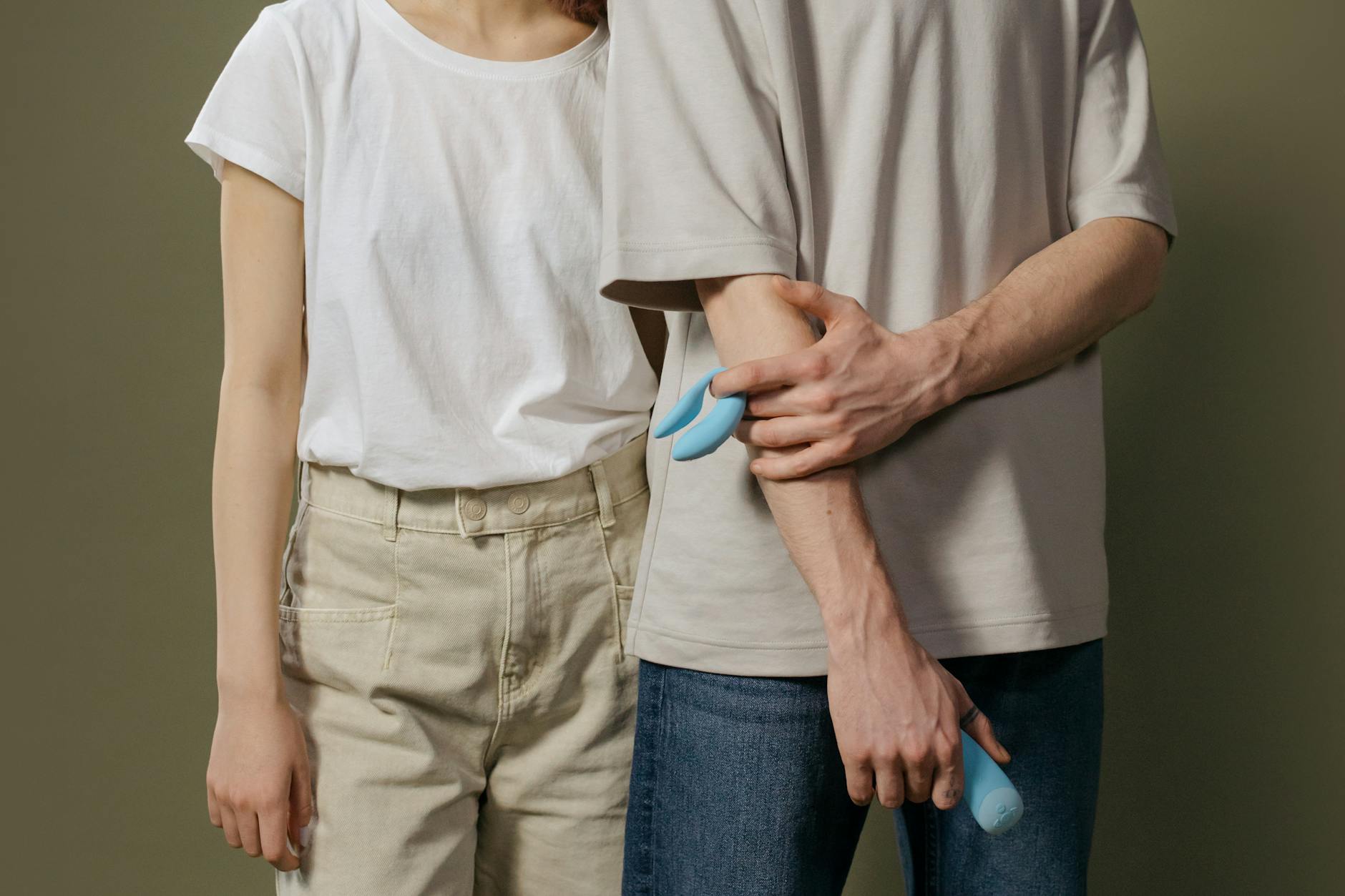
When arousal gets slower, something shifts
Somewhere between year three and year ten, a lot of couples notice it. The spark doesn't ignite as fast. Touch that used to send a signal straight to arousal now requires a sentence or two of mental processing first. Nothing's broken. Your body didn't stop wanting pleasure. The neurology just changed.
I've worked with hundreds of couples navigating this exact pattern, and the honest truth is this: delayed arousal in long-term relationships isn't a sign the relationship is dying. It's a sign that your nervous system has built efficiency into how it responds to a familiar partner. That's not a failure. That's familiarity.
But it does mean your lemon vibrator settings need to shift too. What worked in year two won't work the same way in year ten.
Why long-term partnership changes arousal speed
When you're with a new partner, your sympathetic nervous system is in high alert. Novelty triggers dopamine. Uncertainty keeps your attention pinned to the moment. That's the early-relationship speediness.
In a long-term relationship, your parasympathetic nervous system takes over. Your body trusts the person. Your brain can wander. Arousal becomes less about sudden spark and more about gradual temperature rise.
This isn't weakness or cooling desire. It's your nervous system being efficient. The tradeoff is real though: you need longer warm-up, different kinds of stimulation, and a different approach to what used to work instantly.
Most people respond by either pushing harder on the settings (which backfires) or by assuming the equipment isn't good enough. Neither is true. You're using the right tool. You just need to adjust the angle.
Pattern 1 or 2: Start lower than you think
This is the biggest mistake I see. After years of not needing much stimulation, you reach for pattern 3 or 4, thinking it will speed things up. It won't. It'll feel jarring instead.
With delayed arousal, the goal in the first 10 minutes isn't intensity. It's consistency. Your body needs permission to slowly wake up without shock.
Start at pattern 1. Let it run for three to five minutes. Yes, that feels slow. That's correct. You're not trying to climax yet. You're teaching your nervous system that pleasure is coming and it's safe to lean in.
Most people skip this phase entirely because they're used to "faster equals better." Not here. The slowness is the tool.
Why rhythm matters more than intensity
Once you've spent five minutes at pattern 1, you can move to pattern 2. This is where the real work happens. Stay here for ten to fifteen minutes.
The pattern itself does the work. The lemon's suction technology works beautifully at this level because you're not hammering nerves. You're creating a steady, predictable sensation that your body can sync with. This is when arousal typically starts building visibly.
The mistake is switching patterns too soon. The impulse is natural. You think "I should feel more by now." But your baseline for "more" was set during years of quick arousal. That's not your current baseline. Stick with pattern 2 even if it feels like nothing's happening. It is. You're just not used to the timeline anymore.
Pattern 3: The point of actual escalation
After fifteen minutes at pattern 2, try pattern 3 for the next ten minutes. This is usually when arousal feels noticeably different. Not explosive. Warm and building.
If pattern 3 feels too much, drop back to pattern 2 for another five minutes. There's no shame in that. Delayed arousal means your nervous system needs more runway, not less.
The lemon's five settings are designed to meet people where they are, not to pressure them toward climax. Pattern 3 respects that. It intensifies without jarring.
Pattern 4: Only if you want faster finish
Most people with delayed arousal don't need to reach pattern 4 or 5. Patterns 2 and 3 are the sweet spot. If you do go to pattern 4, you're looking for a shorter session with more intensity at the end, not a full rebuild from stillness.
Use pattern 4 only after you've already spent twenty minutes at lower settings. Your nervous system is warm by then. The higher intensity actually works because you're not starting cold.
The solo versus partnered difference
Delayed arousal feels different alone versus with a partner. Solo, you can take all the time you need without self-consciousness. With a partner present, there's often pressure (even unspoken) to move faster.
If you're using a lemon vibrator with a partner, talk about this explicitly beforehand. Say something like "I need about twenty minutes at lower settings. That's not a problem. That's the plan." Knowing your partner isn't waiting for you to finish faster changes everything.
If your partner is directly involved, they can help with touch, words, or presence in ways a solo session can't. But the lemon's job is the same: steady stimulation while your nervous system gradually wakes up.
Timing matters more than speed
With long-term partners, arousal timing is often mismatched. One person's fire starts instantly. The other needs a slow burn. Neither is wrong. But they're operating on different timelines.
The lemon's patterned settings let you match your own timeline instead of forcing yourself to match your partner's expectation. That's freedom most people don't realize they need.
Set a timer if it helps. "I'm starting now. I'll let you know when I'm ready for anything else." That removes the ambient pressure that kills slower arousal.
When past relationships haunt present sensation
Sometimes delayed arousal in a long-term relationship isn't purely neurological. It's also emotional. After years with one person, you might unconsciously expect disappointment. Or you're carrying tension from previous relationships that taught you arousal wasn't safe.
This is where the vibrator becomes a tool for recalibration. Using patterns one and two alone, without partner pressure or expectation, teaches your nervous system that pleasure is available again. It's slow. It's steady. It comes back.
I recommend every long-term couple try a solo lemon vibrator session first. No performance. No timeline. Just pattern one for fifteen minutes and noticing what happens. Most people are shocked by how much arousal is still there when they're not performing.
Lube changes everything at this stage
With delayed arousal, tissue changes slightly. Thinner, less naturally lubricated. That's not weakness either. It's just reality of years together plus natural aging.
Use water-based lubricant generously with the lemon. This isn't about being broken. It's about making the sensation consistent. The lube lets patterns one and two work more effectively because there's no friction distraction.
Apply fresh lube every seven to ten minutes. This keeps the sensation smooth and tells your body "this is safe and comfortable."
The conversation after
After using a lemon vibrator at these settings, talk. Not debriefing like you failed a test. Just honest: "What did you notice?" "Did that feel different?" "Want to try something different next time?"
Delayed arousal changes mean your preferences have shifted. You might discover that pattern two is actually your favorite now. You might find you need twenty minutes instead of five. You might realize you need a certain kind of touch or talk happening alongside the vibrator.
None of that is backsliding. It's information. Use it.
When to see someone if arousal doesn't return
If you're trying these settings for four to six weeks and arousal still doesn't build at all, talk to a doctor or therapist. Sometimes there's a medical piece (thyroid, hormones, medication side effects). Sometimes there's a relational piece that needs attention outside the bedroom.
A lemon vibrator is a great tool. It's not a diagnosis. If something's blocking arousal, you deserve actual help, not just better settings.
FAQ
How long should I stay at pattern 1 before moving up?
Start with five minutes. If you're not feeling anything shift, ten is fine. If you're feeling a little warmth or awareness, five is enough. This isn't a fixed rule. It's listening to your body. Most people in long-term relationships need at least three to five minutes though, even if they used to need thirty seconds. That shift is normal.
Can I use these settings with a partner watching?
Yes, but the dynamic changes. You might move through patterns faster because you're not entirely alone with your arousal. That's okay. The key is the same: don't skip the warm-up. Even with a partner present, pattern one is doing important nervous system work. Skip it and you skip the groundwork.
What if pattern 2 never feels like enough?
Stay with it longer. Sometimes arousal is slower to build than you expect. Fifteen minutes at pattern 2, then reassess. If you're still not feeling warmth, try adding a vibrator angle change. Different angles hit different nerve endings. A slight repositioning sometimes matters more than a pattern change.
Is this the same for everyone in long-term relationships?
No. Some people speed back up. Others find slower arousal is actually their preference now. The point isn't to return to early-relationship speed. It's to find what works now. That might be slower. That might be fine.
Do I need special technique with a lemon clitoral vibrator at these settings?
Not really. The lemon's design handles most of the work. Just hold it steady and let the suction do what it's made for. Pressure doesn't add to pattern 1 or 2. Consistency does. Light, steady contact. That's it.
What if my partner thinks slow arousal means I'm not attracted to them?
That's a conversation, not a vibrator problem. Say this: "My arousal timeline changed, but my attraction didn't. Here's what I need to feel good." Partners who love you will adjust. Partners who punish you for your body working differently are showing you something important about the relationship.
Your arousal timeline is yours
Long-term relationships change everything about how pleasure works. That's not a loss. It's a rewrite. Your lemon vibrator's lower patterns aren't a downgrade. They're tools designed for your actual body now, not the body you had ten years ago.
Slow arousal is still arousal. It still leads somewhere. It just needs patience and the right settings. If you want to explore what works best for your body right now, start with a sensitivity profile. And if you're navigating this shift with a partner, these strategies work whether they're involved or not.
Your pleasure matters. Even if it takes longer now. Especially then.