
Let's talk about the pressure that's actually blocking you
Performance anxiety during sex isn't about being broken. It's about your brain running a parallel track that has nothing to do with pleasure. While your body is supposed to be feeling, your mind is scoring yourself. "Am I taking too long? Does my partner seem bored? Should this have happened by now?"
That running commentary kills arousal faster than almost anything else. And once you're in that loop, getting out of it feels impossible.
What happens to your nervous system under pressure
When you're anxious about performance, your sympathetic nervous system activates. This is your fight-or-flight response. Blood diverts from your genitals to your limbs. Your pelvic floor tenses. Lubrication stops. The body literally can't respond the way it normally would, which then confirms your worry. "See? It's not working." The cycle deepens.
Meanwhile, your partner either notices the shift or feels the absence of the response they expect. Suddenly sex becomes a negotiation instead of a mutual experience. That's when resentment moves in.
What makes this worse is that willpower doesn't fix it. Telling yourself to relax or to "just focus" only adds another layer of pressure. You're not failing at sex. You're failing at managing a system that's already activated.
Why lemon vibrators break the performance cycle
Here's the counterintuitive part. The solution isn't to try harder. It's to change the task entirely.
Lemon clitoral vibrators work differently than traditional vibrators. Instead of vibration alone, they use gentle suction that creates a sustained sense of stimulation without requiring any particular response from your body. You don't have to "perform" arousal. The device does the sensory work. Your only job is to notice what feels good.
This shift is psychological and physiological at once. Psychologically, you're removing the pass-fail element. There's no orgasm threshold you're racing toward. There's just sensation. Physiologically, suction stimulation activates your parasympathetic nervous system, the one that handles rest and pleasure. Your body can relax into it.
Many of my clients describe the experience as permission. Permission to feel without proving anything.
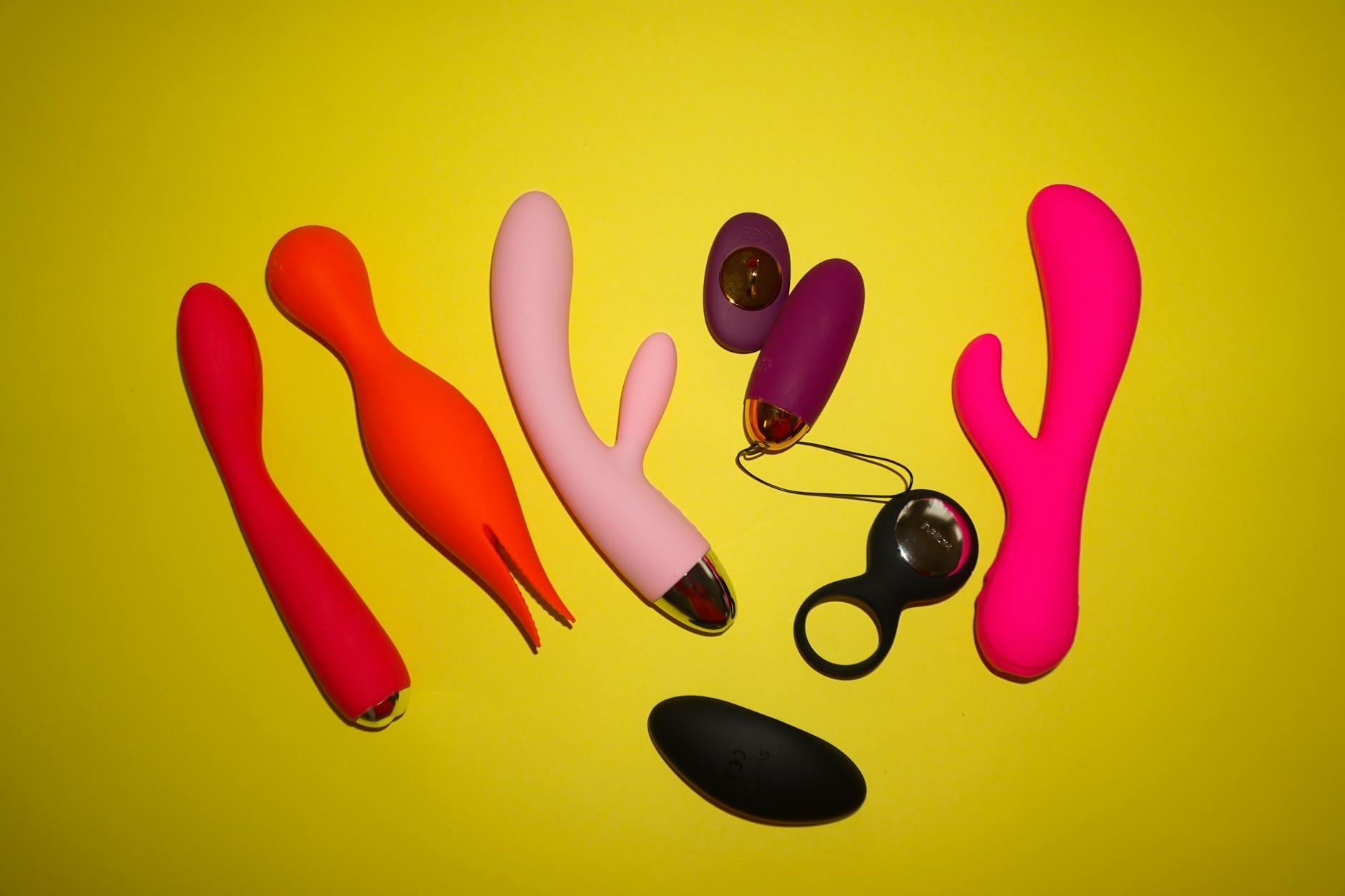
Photo by FounderTips on Pexels
The role of novelty and ownership
Performance anxiety often lives in the shadows of a relationship that's become predictable. Same position, same timing, same barely-there communication about what's actually happening. A new tool, especially one that genuinely feels different, can crack that pattern open.
But here's the crucial part: the lemon vibrator only works if it's yours. Not something your partner suggests. Not something you're using to fix a "problem." You choose it. You explore it alone first. You get curious about what it does to your body when there's zero audience, zero expectations, zero stakes.
When you then bring it into partnered sex, you're not using it as a workaround for anxiety. You're using it as a tool that you already know works for your body. That knowledge is power. It's the difference between "I hope this helps" and "I know what I like."
How to use lemon vibrators without creating new pressure
If you're going to try a clitoral vibrator for anxiety, don't make it another performance test. Here's what actually helps:
Start solo. Spend at least three sessions exploring the device by yourself, with no goal except noticing sensation. This isn't meditation. You're literally just paying attention to what each setting feels like. Begin on the lowest setting. Notice the suction. Move it slightly and notice the change. That's it.
With a partner, communicate before you start. "I want to try this for myself, not as a fix for us." This removes the implication that something was broken. Use it for 10 to 15 minutes, and if you orgasm, great. If you don't, stop. The goal is reconnecting with pleasure, not proving you can still have an orgasm on schedule.
If anxiety starts creeping in ("Is this taking too long?"), pause. Check in with your body, not your schedule. "What do I actually feel?" not "How long has it been?"
When performance anxiety is a relationship problem, not a physical one
Sometimes the real issue isn't your body or even your mind. It's that you and your partner are out of sync about what sex is supposed to be.
Maybe one of you sees it as a performance. The other sees it as connection. Maybe one partner is rushing because they're anxious, and the other is shutting down because they feel rushed. A lemon vibrator won't fix that mismatch. But it can create the space for a different conversation.
If you're consistently unable to relax during sex, especially with a partner you trust, talking to a relationship therapist or sex therapist isn't a failure. It's the most direct route to understanding what's actually driving the anxiety. Sometimes it's rooted in something much earlier than the current relationship.
The clitoral vibrators that help most people with anxiety
Not every lemon clitoral vibrator feels the same. The ones most helpful for anxiety tend to have gentle suction rather than aggressive vibration. You want to feel held, not buzzed. Look for devices with multiple intensities so you can start soft and only increase if you want to.
If you're new to this, starting with something like the Lem gives you a straightforward interface and consistent sensation without the learning curve of more complex controls. The suction is distinct enough that your brain notices something genuinely different is happening. That novelty alone can interrupt the anxiety loop.
The larger shift that actually matters
Performance anxiety thrives in silence. It needs the shame of not measuring up to stay alive. The moment you name it, share it with someone safe, and try a different approach, it loses power.
The best outcome from trying a lemon vibrator isn't an orgasm. It's the moment you realize you can feel pleasure without proving anything. That your body isn't broken. That sensation is allowed even when it's slow, or different, or doesn't follow the script you memorized.
That realization changes everything.
People also ask
Do clitoral vibrators make performance anxiety worse?
Not if you approach them the right way. Anxiety worsens if you use a toy to "fix" yourself or to speed up your response. It improves if you use it as a way to reconnect with sensation without goals. The key is removing the pass-fail element. Lemon vibrators designed with suction rather than pure vibration tend to feel less goal-oriented because the sensation is continuous rather than building toward a peak.
How long does it take for a lemon clitoral vibrator to help with performance anxiety?
Most people notice a shift in their first solo session, simply because the sensation is different enough to interrupt the anxiety narrative. But sustained change, where you actually feel less pressure during partnered sex, typically takes two to three weeks of regular exploration. Your nervous system needs time to learn that this new sensation is safe and pleasurable.
Can performance anxiety during sex go away completely?
Yes, but not by ignoring it. Performance anxiety lives in the gap between what you think should happen and what's actually happening. It dissolves when you close that gap by either changing your expectations or giving your body permission to have a different response than you planned. A good vibrator helps, but the real work is mental. Communication with your partner about what sex actually is for both of you matters more than any device.
Is it normal to feel more anxious when using a new sex toy?
Completely normal, especially if anxiety is already present. Your brain might interpret the newness as another thing to get "right." This is why solo exploration is so important. You get to mess around, laugh at yourself, find what works without an audience. By the time a partner is involved, you already know the device isn't going to hurt you, and you've felt it enough that it's not scary.
What if I have performance anxiety but don't want to use toys?
Perfectly valid. Toys aren't the answer for everyone. But the underlying issue is the same: you need to break the link between sex and performance. That might mean slower sex, different positions, more explicit communication with your partner, or working with a therapist who specializes in sex and relationship anxiety. The common thread is doing something different enough that your brain stops running the old script.
Should I tell my partner about my performance anxiety before trying a lemon vibrator?
Yes, but frame it as "I want to explore my pleasure more" rather than "Something's wrong with me." Transparency builds trust. If your partner hears that you're bringing in a vibrator to fix a problem, they might feel blamed. If they hear that you're curious and want to try something new, they're more likely to feel included.
The real permission slip
You don't need a perfect body or perfect response to deserve pleasure. You don't need to perform arousal on a timeline. Your nervous system doesn't owe anyone predictability.
A lemon vibrator is just a tool. The actual shift happens when you decide that what you feel matters more than what you're supposed to feel. Everything else follows from there.
If performance anxiety is keeping you from sex entirely, reaching out to someone who can help you untangle it is the bravest thing you can do. You deserve that conversation.