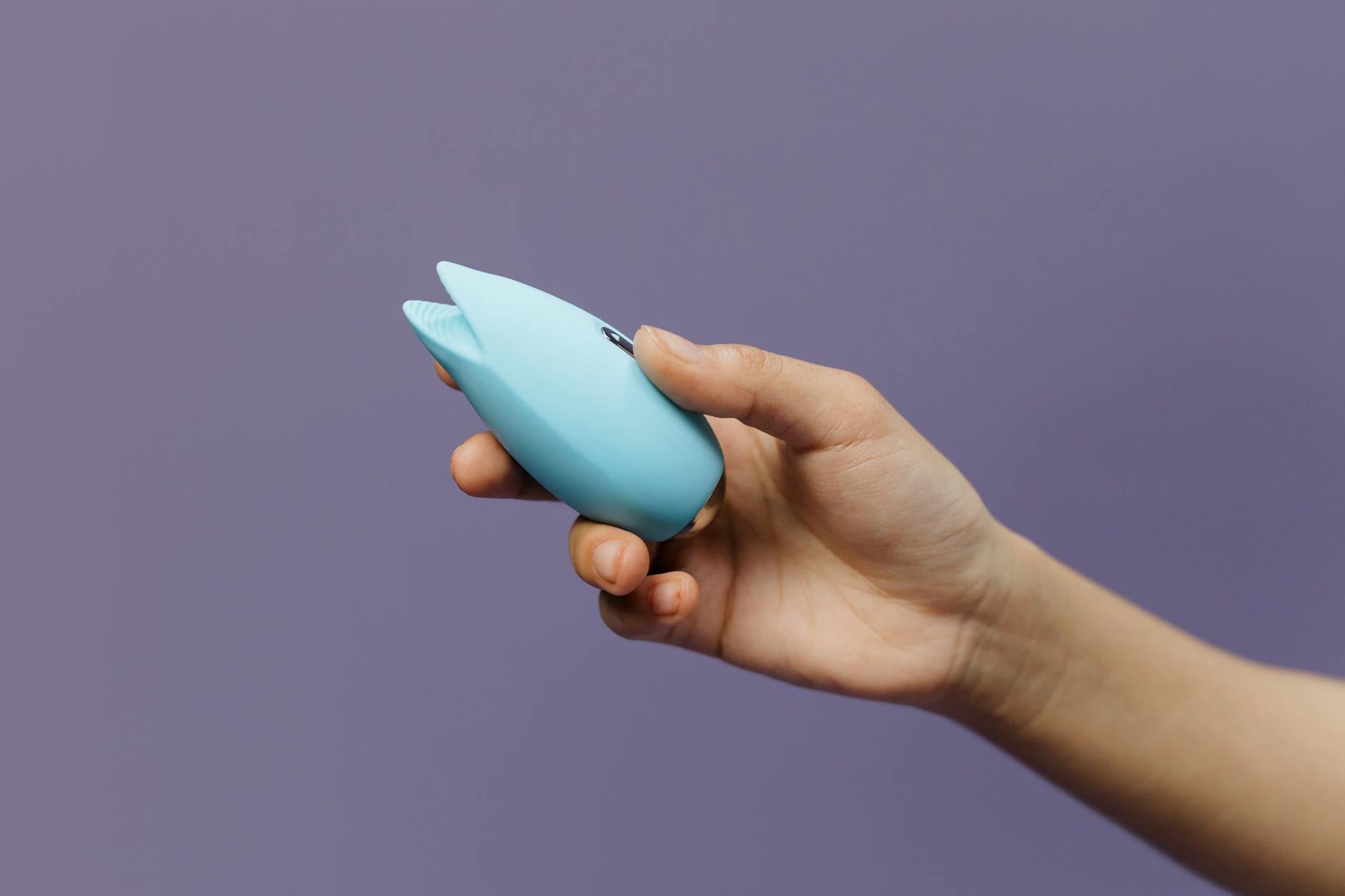
How to Use a Lemon Vibrator With Your Partner for the First Time Without Anxiety
Let's be real. The moment you decide to bring a lemon vibrator into partnered sex, your brain floods with questions you'd rather not have to ask. Will they feel replaced? Will it seem like they're not enough? Will the conversation itself kill the mood before anything even starts?
These are the questions that keep people from ever mentioning it, which is a shame. Because the actual experience of using a lemon clitoral vibrator during partnered sex is almost always better than the anxiety you feel beforehand.
The timing conversation matters more than you think
Don't introduce it during sex. Ever.
The worst possible moment to mention you'd like to use a lemon sucker together is when you're already in the middle of things and something isn't working the way you want it to. That moment feels like criticism, even if you don't intend it that way. It reads as "this isn't good enough" instead of "I want to explore something new together."
Instead, have the conversation when you're clothed, not rushing, and genuinely comfortable. Saturday morning with coffee. A walk where you're side by side instead of facing each other (sidedness reduces defensiveness, actually). Somewhere you can both breathe.
The frame is important. You're not asking permission. You're proposing an experiment. "I've been curious about using a lemon vibrator with you. I think it could feel amazing for both of us. What do you think?" That's not demanding. It's inviting collaboration.
What to say if they seem hesitant
Hesitation doesn't mean no. It usually means they need more information or they're protecting themselves from something they're imagining.
The top three worries partners have are these.
"Does this mean you're not satisfied with me?" No. It means you want more sensation, different sensation. You can feel completely satisfied with someone and still want external stimulation. These are not connected. Make this explicit. "I love what we do together. This isn't about you. It's about exploring another layer of pleasure together."
"Will I feel like I'm being replaced?" Walk them through what actually happens. You're not putting a toy between you. You're inviting them deeper in. A lemon clitoral vibrator works because of suction and rapid micro-oscillation. It doesn't replace hand movement or mouth or penetration. It amplifies. Your partner is still there. They're still touching you. They're still connected. The toy just changes one variable.
"What if it doesn't work or feels weird?" Then you stop. You talk about it. You try something else. No one gets marked wrong. You're experimenting, not auditioning for a job.
Most partners who hesitate come around because the conversation itself creates trust. You're not sneaking something in. You're asking. You're explaining. You're treating them like a collaborator.
The practical setup (less awkward than you think)
Here's what I recommend to couples trying this for the first time.
Start with you in control of the toy. Position your partner so they can watch and touch you. This removes the pressure they might feel to operate something they've never used, and it keeps you in charge of sensation. You know your body. Use the lemon vibrator the way you'd use it solo, and let them participate by staying close, by using their hands elsewhere, by narrating what they notice.
Speed and pattern matter less than you think on the first try. Start low. Maybe pattern one or two on the Lem if you're using that. The point isn't intensity. It's novelty and shared experience. Let your body adjust to the sensation while they adjust to watching it happen.
Don't try to orgasm right away. I know that sounds counterintuitive, but the pressure to perform when someone else is watching can hijack your nervous system. Instead, focus on what feels different. Where the sensation lands. How it changes when they're touching you somewhere else at the same time.
Talk while it's happening. "This feels incredible." "I like it when you do that while I'm using this." "Try this speed." Partners want to know they're doing it right. Narrative guides them.
When to hand them the controls
After a few times of you using it on yourself while they're present and touching you, you can shift to them holding it. But not on the first go.
When they do take the controls, they'll probably be more tentative than you'd be solo. That's normal. They're worried about pressure, about getting the angle wrong, about sensing you're not enjoying it. Coach them gently. "A little more to the left." "That speed is perfect." "Keep doing that."
The learning curve is about two or three sessions before they understand how your body responds and what speeds and patterns create the sensation you're chasing. After that, it becomes intuitive. Some partners love this. They get to focus entirely on your pleasure. It's a different kind of intimacy than penetration or manual stimulation.
What you might notice about pleasure itself
Here's the thing nobody tells you. Adding a lemon clitoral vibrator to partnered sex sometimes changes what orgasm feels like. Not worse. Just different.
Some people report more intense sensation. Some report that they can be more present mentally because the physical stimulation is being handled, so they can focus on emotional connection. Some find they orgasm differently, or that their partner can feel the vibration internally if there's penetration happening, which creates a new kind of feedback loop.
None of these are bad. They're just variations. Your body will tell you what works. The gift of having a partner present is that they can notice things you might miss about your own response. "Your breathing changed." "Your whole body just relaxed." They're seeing you in real time, which creates a different kind of intimacy.
If something doesn't feel good, you stop. No judgment. No lingering awkwardness. "That wasn't it for me tonight, but I liked the closeness." And you move on to what works. The freedom to pivot without shame is actually what makes couples better at sex over time.
The conversation after
Don't skip this part. Once you're both showered and settled, ask them what it was like from their side. Did they feel connected? Was there anything that surprised them? What do they want to try differently next time?
Their answers matter. You're both gathering data about what works for your shared pleasure. If they felt distant or hesitant, don't push. Curiosity over pressure. "What made you hesitant?" "Was there something you wanted to do differently?" "What would make this feel better for you?"
Most couples who make it through the initial awkwardness find that introducing a lemon sucker is actually a turning point. Not because the toy is magic. Because the conversation required to bring it in forces you both to get explicit about desire in a way you might not have otherwise. And explicitness is what creates real sexual intimacy.
The reframe
Right now, you might be imagining this conversation and your stomach is knotting. That's understandable. But here's what actually happens in most couples who try it.
Your partner hears you say you want to explore something new. They might hesitate for a moment. Then they almost always want to help. Because that's what partners do. They show up for your pleasure, especially when you ask clearly and without shame.
The lemon vibrator isn't a threat to your relationship. It's an invitation. An invitation to be curious together. To prioritize sensation and connection. To treat pleasure as something you build together rather than something that has to happen in a narrow set of ways.
That conversation is the hard part. Using the toy together is the easy, fun part. Start with the conversation. The rest follows naturally.
People also ask
How do I know if my partner will be open to using a lemon vibrator during sex?
You don't until you ask. But there are signals. Partners who are already communicative about sex, who ask what you like, who seem curious about your pleasure — those partners are usually open. And even if they're initially hesitant, hesitation is often just unfamiliarity, not refusal. The question isn't whether they'll be perfect with it immediately. It's whether they're willing to learn.
Will using a lemon clitoral vibrator during partnered sex make my orgasms weaker when I'm alone?
No. Pleasure doesn't work like a battery that depletes. Using a lemon sucker during partnered sex actually tends to reinforce what your body likes, which can make solo pleasure easier and clearer over time. Your nervous system learns. It doesn't forget.
What if I want to use a lemon vibrator during penetrative sex and it feels uncomfortable?
Then stop and adjust. The angle might need to change. Your partner's depth or speed might need to shift. The pattern or intensity of the toy might need to drop. Or it might just not work in that particular position with that particular configuration. That's fine. Not every setup works for every body. The point is you're exploring, not achieving a specific outcome.
Can my partner feel the vibration if we're using a lemon clitoral vibrator during penetrative sex?
Yes. They might feel the vibration internally, or they might feel it through your muscle contractions. Many partners find this intensely pleasurable. It's a feedback loop. Your pleasure affects theirs, and vice versa. That's actually part of why couples often report deeper connection after introducing this.
How do I bring this up if I've never talked about sex toys before?
Start small. You don't have to unpack your entire sexual history or bucket list in one conversation. "I've been thinking about exploring something new. I'd like to try a lemon vibrator with you sometime. How would you feel about that?" You're not asking for their life story. You're checking in. Most partners respond better to a specific request than to vague anxiety.
What if my partner is insecure and I'm worried they'll take it badly?
Insecurity is common, and it deserves tenderness. But tenderness doesn't mean never asking for what you want. It means being clear about why you want it and what it means. As a therapist, I can tell you that partners who feel genuinely reassured — who hear that their partner still desires them, still wants connection — are usually more open than we expect. The reassurance has to be real and specific, not just thrown in to cushion the request. But it's worth doing well.
Final word
Introducing a lemon vibrator to partnered sex requires one vulnerable conversation and a small shift in how you frame pleasure together. It's not complicated. It's just new. And new things require a breath, a clear head, and trust that the person next to you wants what you want — connection, exploration, sensation, and closeness. Trust that usually holds.