
How to Use a Lemon Vibrator When Your Partner Initiates Less Often Than You Do
Let's name the thing nobody talks about
You want sex more often than your partner does. This is the most common mismatch in long-term relationships, and it's also the one that gets buried deepest. You don't say it out loud because it sounds needy. Your partner doesn't address it because they feel guilty. Meanwhile, both of you sit with low-level resentment, and the gap just gets wider.
Here's what I see in my practice: couples with mismatched desire don't have a sex problem. They have a communication problem wearing a sex disguise. And tools like the lemon clitoral vibrator don't fix that problem, but they do stop the spiral long enough for you both to breathe and think clearly.
Why the mismatch gets worse, not better
When you initiate more often, two things happen simultaneously. First, rejection accumulates in your nervous system. Each "not tonight" registers as a small wound. Your partner doesn't experience it as rejection because they don't want sex less than you do. They want sex differently. The timing is wrong, their energy is wrong, or they're performing desire they don't actually feel because they sense your need.
Second, the pressure escalates. If your partner knows you want sex more often, their initiation threshold goes up. They don't want to disappoint you again. So they reach for it only when they're absolutely certain, which means less reaching. You interpret less reaching as less attraction. Your partner knows you're interpreting it that way, which makes the whole thing feel like a job. Now nobody wins.
The resentment isn't actually about sex frequency. It's about feeling wanted, feeling safe in your desire, and feeling like your partner genuinely chooses you. That's what gets broken in the mismatch cycle.
What a lemon vibrator actually does in this situation
A lemon clitoral vibrator gives you back agency in your own pleasure. This matters more than it sounds.
Right now, your pleasure is tangled up with your partner's willingness to participate. Even when you're together, you're partly waiting for them. Partly managing their energy, their comfort level, their performance. A suction toy like the Lemon separates your satisfaction from their participation. You can have real pleasure on your own timeline. You can orgasm consistently, intensely, without waiting or managing anyone else's energy.
Here's what shifts: when you're not desperate for your partner to initiate, you stop pushing. The pressure drops. Your partner stops feeling guilty. They stop bracing for rejection. And weirdly, once the desperation evaporates, initiation often returns naturally. Not always on your preferred frequency. But with genuineness instead of obligation.
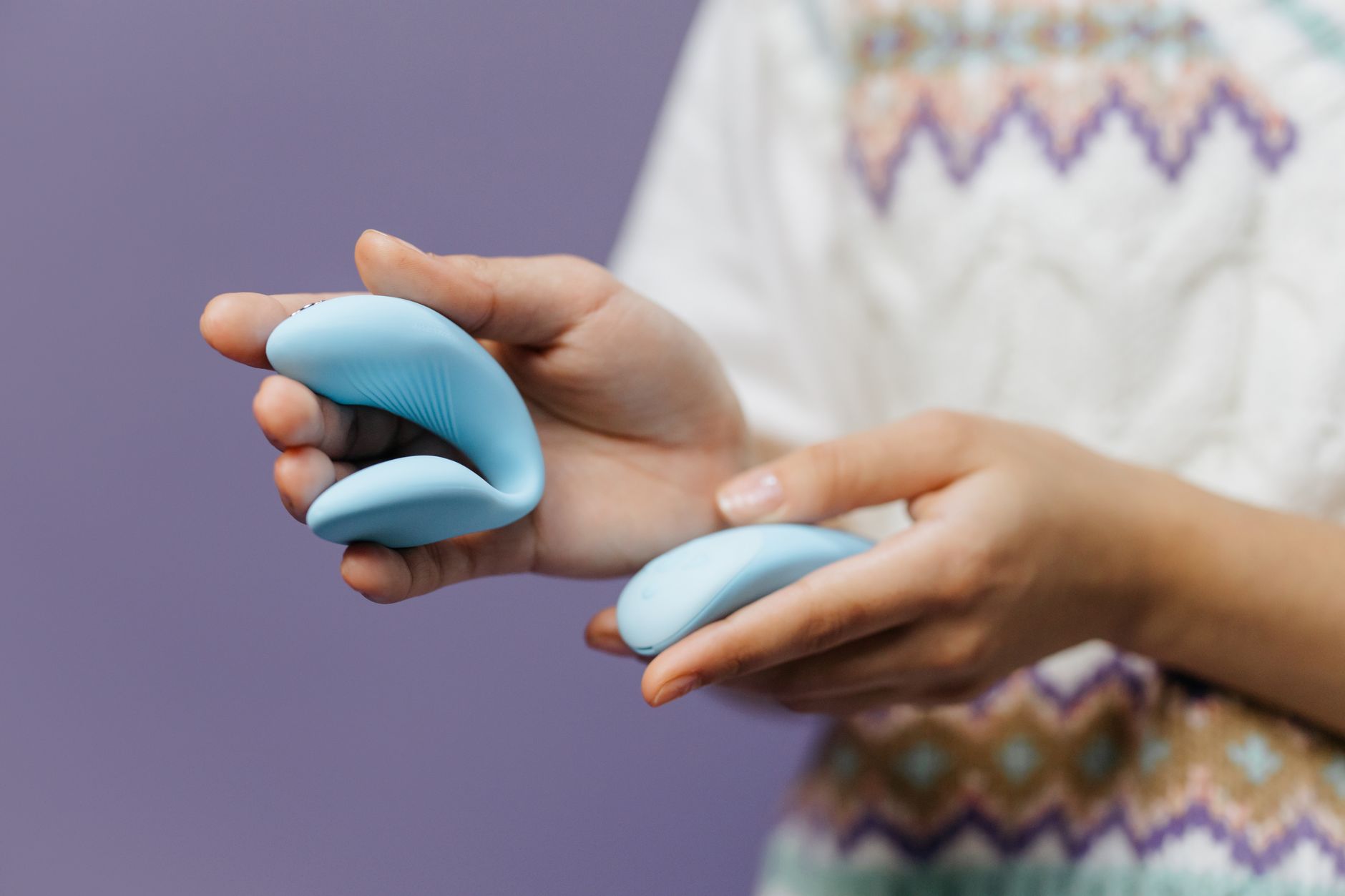
Photo by cottonbro studio on Pexels
The practical setup: using your lemon vibrator as a couple tool
This is the part most couples skip, and it costs them. You need to normalize the vibrator in your relationship before you use it alone.
Talk about it not during sex. Talk about it over coffee or in the car. Say something like: "I want to explore solo pleasure more. Not instead of us. Alongside. I'm going to use a vibrator when I want, and I wanted you to know." That's it. No apology. No invitation for them to participate unless they ask. No theatrics.
If your partner seems threatened, ask what that's about. Usually it's not about the toy. It's about fear that you're leaving them behind, or that your pleasure has become a mirror for their inadequacy. That's worth addressing directly, and it's worth noting that a conversation about that fear is more important than any toy choice.
Once you've used the lemon vibrator solo a few times, you can introduce it into partnered sex if you want to. Some partners find it hot. Some don't care. Some partners use it on you while you're together. The point isn't to perform for them. The point is to have pleasure that doesn't depend on their mood.
When your partner wants to watch or participate
If your partner becomes interested in your vibrator use, that's genuinely good news. It usually means the pressure is off them and they can access their own desire.
Be clear about what you want: "I like when you touch me while I use it" or "I want to do this alone, but I like knowing you're nearby." Some people want to hand it to you mid-sex. Some want to direct how you use it. Some want to just watch. All of these are fine as long as they're actually what you want, not what you think will keep them interested.
The most common trap: you shift from managing their initiation to managing their participation in your solo pleasure. Same dynamic, different costume. Don't do that. Use the vibrator how you want, with or without them in the room. If they want to join, great. If they don't, that's also great. Your pleasure doesn't need an audience.
The conversations that actually matter
Here's the thing nobody tells you: talking about sex frequency doesn't fix frequency. It just makes the silence louder.
What works is talking about what you actually need. Not how often. Not positions. But the thing underneath. Maybe you need to feel chosen. Maybe you need evidence that they still want you. Maybe you need to feel powerful in your body again. These are different problems, and they need different solutions.
Some partners with lower desire frequencies will tell you they feel pressure around performance. They can't get hard, or wet, or relaxed. The lemon vibrator actually helps here too. It removes the focus on penetration. It lets you both access pleasure without the performance requirement. You'd be shocked how often that unsticks things.
Other partners will tell you they're stressed, depleted, or touched out from kids. That's not a sex problem either. That's a life structure problem. Maybe you trade childcare differently. Maybe you go to therapy separately first, then together. Maybe you take a break from pursuing sex and just do non-sexual touch. These aren't quick fixes, but they're honest ones.
The timeline: when to expect things to shift
Most couples report that introducing solo pleasure tools takes pressure off initiation within 4 to 6 weeks. Not because the tool is magic, but because the desperation lifts.
Then there's often a rebound effect around week 8 to 10. Your partner might initiate more because they're not braced for rejection. Or they might initiate less because they realize they actually don't want sex as often as they thought. Both are good information.
The real shift happens when you stop scorekeeping. When you're not mentally tracking "they initiated twice this month" and instead just noticing when it happens. That usually takes 3 to 4 months of consistent solo pleasure practice. Your nervous system has to believe you're not starving for their initiation. Belief takes time.
When to get help beyond the toy
If your partner's desire has cratered suddenly, something else is usually happening. Depression, medical issues, resentment about something unrelated to sex, an affair. A vibrator won't fix those things. Neither will a conversation. You need a therapist.
If you're using your lemon vibrator constantly and it's not touching the loneliness, that's also information. Maybe the mismatch is bigger than the issue. Maybe you need to have a real talk about whether this relationship is meeting your needs. That's scary and honest, and it matters more than any tool.
If your partner becomes angry about your solo pleasure, that's a red flag. Control and isolation are the early signs of something that won't get better. Get support before this becomes bigger.
For most couples though? A lemon clitoral vibrator plus an honest conversation equals a very different dynamic within months. You get your pleasure back. Your partner gets permission to have their own timing. You both get to stop performing for each other's needs. That's when real intimacy returns.
FAQ: The questions that come up
Is using a vibrator alone while I'm in a relationship cheating?
No. Solo pleasure is fundamentally different from infidelity. You're not betraying your partner by having orgasms on your own schedule. In fact, when you stop waiting for your partner to provide all your pleasure, the sex you have together usually gets better because you're not desperate. Desperation kills eroticism. Confidence builds it.
My partner says they don't want me using a toy because it means I don't need them. How do I respond?
That statement is about their fear, not your toy. You might say: "I need you for connection and presence. I want a vibrator for reliable sensation. Those aren't competing. They're different." If they can't work with that distinction, that's worth exploring in therapy. A partner who needs to be the sole source of your pleasure is either insecure or controlling, and neither of those things shifts without real work.
How often should I use my lemon vibrator if my partner initiates less?
As often as you want. There's no magic frequency. Some people use it daily. Some twice a week. Some when they're feeling particularly activated. The goal isn't to use it a certain amount. It's to have pleasure that doesn't depend on your partner's mood. Once you have that, the frequency usually settles naturally.
Can I use a lemon vibrator during sex with my partner even if they're not super into toys?
Yes. You don't need their permission to include something in your own pleasure. That said, introducing it midstream when they're not expecting it is different from a conversation first. If they've never seen a lemon clitoral vibrator before, show them, explain it, give them time to sit with it. Then try it together. Some partners warm up once they see how focused and satisfied it makes you.
What if my partner initiates even less after I start using a vibrator?
That usually means something else is going on. Anxiety, resentment, a different problem entirely. This is when a real conversation (ideally with a therapist) becomes important. The vibrator isn't causing the decrease. It's revealing something that was already underneath.
How do I know if this is a toy problem or a relationship problem?
If nothing else about your relationship feels off, and the only issue is sex frequency, it's likely a mismatch that tools can help with. If you feel unseen, disrespected, or controlled in other areas, the sex frequency is a symptom of something bigger. A vibrator fixes mechanics. It doesn't fix power imbalances or contempt. Get clear on which one you're actually dealing with.
The real ending
Desire mismatch is one of the most common relationship ruptures, and it's also one of the most fixable ones. Not because a lemon vibrator magically resets your partner's libido. But because it removes desperation from the dynamic and gives you access to pleasure that doesn't require negotiation.
Once you have that, the conversation changes. Instead of "why don't you want me" it becomes "what do we both actually want." That's a completely different dialogue. And that's where things usually shift.
Your pleasure matters independently of your partner. Building that belief, with a tool that actually works, changes everything.