The timeline shift nobody warns you about
You used to come in under a minute. Maybe two if you were having an off day. Now you're looking at 10, 15, sometimes 20 minutes of stimulation before anything happens. And then when it does, it feels different. Smaller. Slower to build. It's easy to panic about this. Easier still to just stop trying.
Here's what's actually going on: your nervous system hasn't broken. Your body hasn't failed. The mechanics of arousal have just gotten more complicated, and nobody bothered to give you the manual.
I work with people across every age and stage, and the delayed orgasm question comes up constantly around the mid-forties mark and beyond. The good news is that understanding the shift gives you permission to stop fighting it. Better news: the right tool, like a lemon vibrator, can completely reframe what "taking longer" actually means.
Why arousal takes longer (and what's actually happening)
Three overlapping things change as estrogen shifts with age.
First, the genital blood flow changes. Arousal is fundamentally about blood rushing to the clitoris. That rush used to happen nearly instantly, triggered by thought alone. Now it takes actual sustained stimulation. The clitoral tissue is still there, still capable, still has all those nerve endings. But the vascular response has slowed down.
Second, your nervous system has gotten pickier about what registers as arousal. When you were younger, almost any stimulation that landed on the clitoris registered. Now your brain needs context. Are you relaxed? Is your partner present in a way that matters? Are you stressed about work, or your body, or the state of the world? These factors, which maybe used to add 5% to the experience, now add 40%. Arousal is less automatic and more conditional.
Third, the clitoral tissue itself has changed. Thinner skin, less elasticity, different sensitivity thresholds. This isn't damage. It's aging. But it means the kind of stimulation that worked before sometimes overshoots now, or undershoots, or just feels jarring in a way it didn't before.
Here's the part that matters: none of this makes orgasm impossible. It makes it different. And "different" doesn't mean worse.
Why delayed doesn't mean diminished
I need to separate two things that get tangled together in the conversation about aging and sex.
There's the intensity of the orgasm itself. And there's the journey to get there.
Most people assume that if the journey got longer, the destination must be smaller. That's genuinely not how it works. Some of my clients report that the orgasms they have now, at 50 or 55 or 60, are some of the most satisfying of their lives. Not despite the longer buildup. Sometimes because of it.
Why? Because pleasure isn't a sprint. The longer arousal phase, if you stop fighting it and start inhabiting it, gives you more time in the most pleasurable part of sex. More time with sensation. More time before the release. More time to feel your body from inside.
That's the reframe that changes everything.
How a lemon clitoral vibrator shifts the timeline
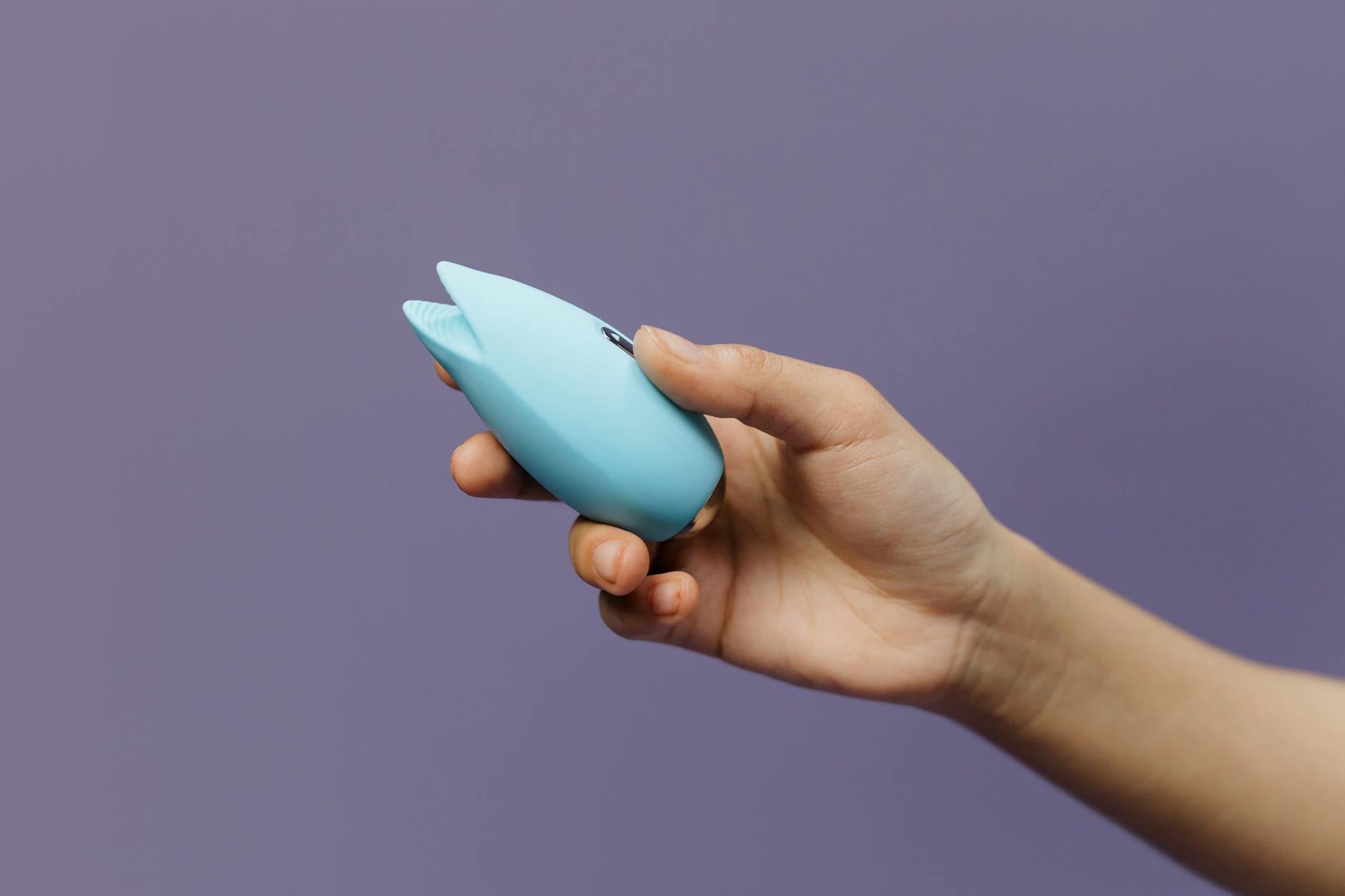
A lemon sucker like the Lem works differently than traditional vibrators in a way that matters specifically for this problem.
Traditional vibrators deliver rhythmic stimulation. Fast or slow, but rhythmic. That works great if your arousal response is fast. If you need sustained, building stimulation to wake up the blood flow? Rhythm alone gets boring. Your nervous system adapts. The sensation plateaus.
A lemon vibrator uses suction and air-pulse technology. Instead of vibration, it creates a gentle seal and pulsing sensation around the clitoris. This does two things that matter when arousal takes longer:
First, it keeps sensation novel. Even at the same intensity setting, the suction pattern registers differently to your nervous system than the same old vibration pattern. Your brain stays engaged. Arousal keeps building instead of plateauing.
Second, it works better with slower arousal. The suction doesn't require the same kind of direct clitoral contact that traditional vibrators do. Your tissue doesn't have to be in a specific state for it to feel good. You can start using it earlier in the arousal phase, when you're still building blood flow, and it will actually help accelerate that process rather than feeling too intense or jarring.
The practical timeline: what to expect
When you're using a lemon clitoral vibrator and you know arousal takes longer now, here's what changes about your session.
Start your warm-up earlier. If you used to jump straight into focused stimulation, now spend 10-15 minutes on foreplay, or just on your own body, building arousal through whatever works for you. Reading erotica, thinking about fantasy, touching your body in ways that feel good but aren't the main event. Let blood flow start accumulating.
Then switch to the lemon vibrator. Start on one of the lower intensity settings. Pattern 1 or 2 on a device like the Lem. This is where a lot of people get impatient. They expect immediate results and turn it up. But lower intensity, when you're already somewhat aroused, often works better. You're adding to existing sensation, not starting from zero.
Spend 8-15 minutes here. If nothing is happening at 10 minutes, that's normal. You're not broken. You're just in a slower arousal timeline. Increase the intensity gradually, watching what your body does. You'll notice the sensation sharpens. The pressure and suction combination starts to feel more and more focused.
When you're genuinely close (you'll know the feeling even if it's different from before), you can bump the intensity up further. But most people find that moderate intensity held steady, over time, gets them there more reliably than chasing the highest setting.
The psychological part: stop treating time as failure
This might matter more than the mechanical part.
When orgasm used to be fast, time was built into your sense of success. Fast equals working. Slow equals broken. Now you have to completely rewire that equation.
Twenty minutes is not a failure. It's not a sign that something's wrong with your body. It's not even that unusual. It's just a different timeline.
The thing is, once you stop fighting the timeline, those 20 minutes aren't tedious. They're the experience itself. That's where the pleasure is now. Not in the 5-second crescendo at the end, but in the 15-minute buildup.
If you're with a partner, this is worth saying out loud. "I know I'm taking longer now. That's not a problem for me. I want to build this differently." You're not asking for patience like you're asking for a favor. You're describing the experience you actually want.
When to troubleshoot
If you've given yourself 20-30 minutes with a lemon vibrator on varied intensity and still nothing's happening, a few things to check:
Stress load. Cortisol genuinely interferes with arousal. If you're in a high-stress period, your body might need different conditions to turn on. That's not broken. It's a signal.
Medication. Some antidepressants and blood pressure medications do slow arousal response. If you're on something new, the delay might be timing, not age. Worth asking your doctor.
Pelvic floor tension. The older we get, the more we tense the pelvic floor without realizing it. A tight pelvic floor can dampen sensation. Learning to consciously relax it before you start makes a huge difference.
Hormonal changes. If you're in perimenopause or menopause, you may need to explore how hormonal shifts specifically affect your arousal pattern.
If arousal has disappeared entirely and isn't improving with time or technique, that's worth bringing to a doctor. It's sometimes fixable and usually discussable.
The pleasure that comes with slowing down
I'll be honest: I didn't expect the clients who shifted into slower arousal timelines to report more satisfaction. I thought they'd just adapt. Instead, a lot of them found something.
When you're not chasing the orgasm, you notice the pleasure. The way your body feels against the bed. The exact moment when sensation shifts from diffuse to focused. The breath pattern that shows up just before you come. The tiny changes in sensation as intensity increases. All of that gets compressed when orgasm is fast. It opens up when you slow down.
A lemon clitoral vibrator like the Lem handles this timeline gracefully. It's designed to work with gradual arousal. The suction sensation starts to feel natural pretty quickly, and the patterned pulses keep your nervous system engaged even when you're 15 minutes in.
Your body didn't fail you. The timeline just changed. And once you stop treating time as a problem, that change can actually become the best part.
Frequently asked questions
How do I know if my delayed arousal is normal aging or something medical?
Normal aging usually looks like a gradual shift over months or years. Medical changes come on suddenly. If your arousal response changed overnight, or alongside other symptoms like hot flashes, mood shifts, or pain, bring it to a doctor. If it's been gradually creeping longer over a couple years, that's textbook aging. Either way, you deserve to explore it, not just accept it.
Can I still have quickies if arousal takes longer now?
Yes, but expect them to feel different. A 5-minute session won't lead to orgasm the way it used to. But that doesn't mean it's not worth doing. Some of the most connected moments people report aren't the ones that end in orgasm. Sometimes just touch, attention, and pleasure without the goal is exactly what you need. Save the longer sessions for when you have time to build.
Does my partner need to do something different if I'm taking longer?
Not necessarily. If your partner used to provide arousal in ways that worked for you, they probably still can. The thing that changes is context. More foreplay. Less pressure to arrive at orgasm on a schedule. Maybe they help create conditions where you can relax more deeply, which allows blood flow to happen more naturally. How to use a lemon vibrator for couples building intimacy covers this in more detail.
Why does a lemon vibrator work better than my old vibrator for this?
Lemon clitoral vibrators use suction instead of pure vibration. That means they work with your body's arousal response rather than against it. Vibration can oversimulate tissue that's not fully aroused yet. Suction works better at lower intensities and keeps sensation novel even after 15 minutes, which helps arousal keep building.
Is it normal to need stronger intensity as I age?
Actually, the opposite usually happens. Many people need lower intensity but longer duration. Your clitoral tissue is more sensitive to overstimulation as you age, but it's also more sensitive to the right kind of sustained stimulation. Start lower than you think you need to. You'll probably find it works.
What if I'm on antidepressants and my arousal slowed down?
Some antidepressants do genuinely slow arousal response. That's a real side effect, not something you're imagining or doing wrong. Talk to your prescriber about it. Sometimes switching medications helps. Sometimes other strategies work better than speed. How to use a lemon vibrator for better sensation when numbed by antidepressants digs into this specifically.
The bottom line
Orgasm taking longer doesn't mean it's going away. It means you get to redefine what the whole thing means. The journey becomes the point. Sustained pleasure beats quick release. A lemon vibrator meets your body where it actually is now, instead of trying to make it perform like it did 20 years ago.
Your body didn't betray you. Time just changed the game. And honestly, the new game might be better.
If you're ready to explore this with the right tool, we're here. If you have specific questions about how your body works, reach out. You deserve pleasure that matches your timeline, not one that fights it.