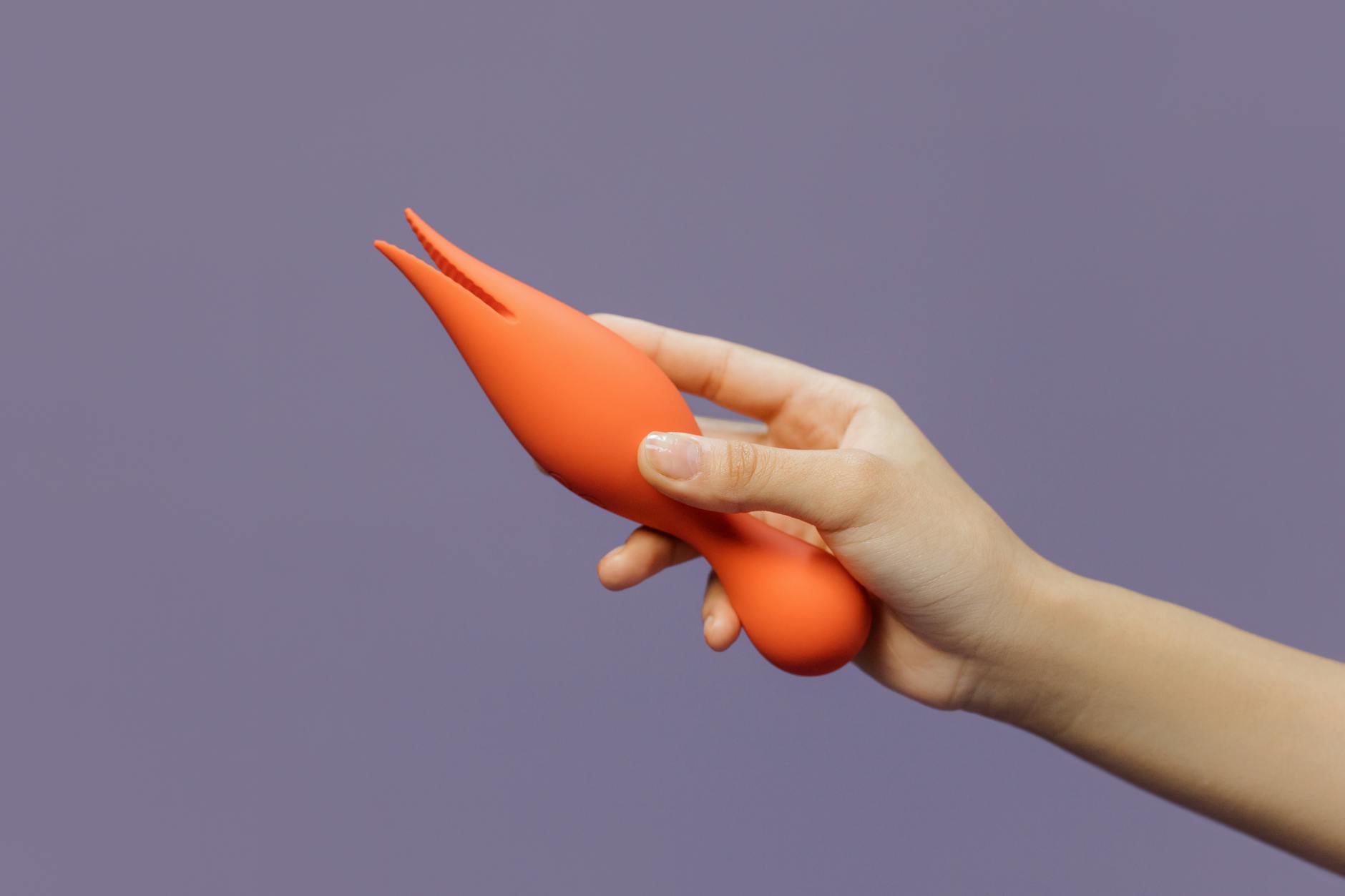
How to Use a Lemon Vibrator When Orgasm Feels Weaker or Less Intense
Let's be honest. You've probably noticed it. An orgasm that used to make you gasp now feels more like a flutter. Or the intensity is there but it's gone in seconds instead of building. Or worst of all, you're not even sure you're having one anymore because the sensation is so muted.
This is happening to way more people than you'd think, and the good news is it's almost always reversible. The bad news is that most explanations you'll find online will blame it on one thing (age, hormones, your partner, stress) when really it's usually a combination. And that combination matters because the fix depends on understanding what's actually going on.
Why orgasm intensity changes
Here's the mechanical part first. Orgasm is a chain reaction in your nervous system. Your clitoral nerves fire. Those signals reach your brain. Your brain sends signals back, which contract your pelvic floor muscles. Those contractions are what you feel as an orgasm.
Anything that interrupts this chain reduces intensity. Hormonal shifts thin the tissue around your clitoral nerve endings, which means fewer signals make it through. Stress tightens your pelvic floor chronically, so those muscles can't contract sharply when it's time. Certain medications (antidepressants especially) dampen the entire nervous system's responsiveness. Age changes blood flow slightly. And sometimes it's just disconnection. Your brain isn't engaged because your mind is somewhere else entirely.
The thing is, these aren't separate problems. A woman in her mid-40s with slight hormone shifts, some stress from work, and a partner she's been with for 15 years might have all four happening at once. Each one makes the others worse.
The lemon vibrator angle
Traditional vibrators rely on your body's natural lubrication and tissue sensitivity to work. They buzz. You feel the buzz. Your nerves respond. If your tissue is thinner or your nerves are less responsive (whether from hormones, medication, or disconnection), the buzz isn't enough.
Lemon clitoral vibrators (sometimes called lemon sucker vibrators) use air-suction technology instead. They don't buzz. They create a gentle pulling sensation that stimulates the entire nerve cluster around your clitoris, not just the surface. This matters for two reasons.
First, suction reaches deeper nerve endings that vibration might miss, especially if tissue has thinned or sensitivity has dulled. Second, the sensation is gentler to start but can build more intensely. You control the patterns and intensity, so you're not fighting against a mechanism that's too strong or too weak for your current sensitivity.
Many people report that suction-based stimulation produces orgasms that feel wider, longer, and more full-bodied than what they were getting before. That's because you're stimulating a broader area of nerve tissue rather than one spot.
Getting started with a lemon vibrator
If you've only ever used traditional vibrators, switching to a lemon clitoral vibrator feels different. That's the point. Different can feel better, but you have to approach it with realistic expectations.
Start with the lowest suction level. Not level 2 or 3. Level 1. Your tissue sensitivity has changed, so you need to recalibrate what feels good. Spend time on the lowest patterns first. Let your body get used to the sensation. This usually takes 3-5 sessions, not 3-5 minutes.
The most common mistake is switching to higher intensity too fast. You think "this isn't working" and crank it up. Then you override your body's natural arousal rhythm. It's like turning up the heat when a sauce isn't simmering properly. You end up with heat but no depth.
Instead, spend 15-20 minutes on low intensity, moving the lemon vibrator around different areas. The clitoris has way more nerve endings than people realize. Parts that feel numb at first often respond once they've had sustained, gentle stimulation.
Pairing it with body awareness
Intensity returning isn't just a mechanical thing. Your brain is half the equation. If you're not present during sex, no vibrator is going to fix that.
Before you use a lemon sucker vibrator, try this. Lie down without any toys. Spend five minutes noticing where you feel sensation in your body. Your thighs. Your stomach. Your nipples. Your inner arms. Noticing sensation anywhere actually helps your nervous system wake up more generally. It's not filler. It's training.
Then use the vibrator. But don't multitask mentally. You're not trying to achieve anything. You're not performing. You're literally just paying attention to what you feel. This sounds simple and boring. It's neither. Most people find that presence alone brings back intensity they thought was gone.
Timing and your cycle
If you still have a menstrual cycle, orgasm intensity naturally varies. It's stronger around ovulation (when estrogen is higher) and weaker right before your period. This is completely normal and not a problem.
But if you're post-menopausal or on hormonal birth control, intensity should be more stable. If it's still dipping, look at stress, sleep, and medication timing. Those move the needle more than you'd expect.
When to consider hormone levels
If you've been using a lemon vibrator consistently for 4-6 weeks, you're present during sex, and intensity still hasn't returned, it's worth checking hormone levels. Not because you need HRT necessarily, but because knowing where you stand helps you make decisions.
Low testosterone is the most common culprit for reduced orgasm intensity. Testosterone drives arousal and nerve sensitivity in people of all genders. If it's genuinely low (not just "lower than before"), topical testosterone cream can change everything. Talk to a gynecologist or menopause specialist who actually prescribes it. The average GP often doesn't.
The partner conversation
Here's something nobody talks about. Sometimes reduced orgasm intensity happens because your partner's approach has gotten lazy or predictable. After years together, initiation becomes routine. Foreplay gets shorter. Your partner assumes they know what you want.
If that's the case, a lemon vibrator can actually be the tool that makes communication easier. You can say, "I want to try this together." It reframes the conversation from "something is wrong with me" to "let's explore something new." And honestly, watching a partner use a lemon clitoral vibrator on you is different from watching traditional vibration. It's slower. More intentional. It can reconnect you both.
What doesn't help
Don't chase sensation with higher and higher intensity. This is the opposite of what you need. More buzzing or stronger suction eventually damages nerve sensitivity further. It's like turning up volume so high your ears stop hearing properly.
Don't assume medication is the only culprit. Yes, antidepressants dull sensation. But they usually do this alongside other things. Stopping medication (which you should never do without a doctor) often doesn't restore sensation fully if stress is still high or if hormones are actually low.
Don't ignore the mental side. A lemon sucker vibrator is a tool. A really good tool. But it's not magic. Presence, breathing, and patience matter more than the toy itself.
Building intensity back gradually
Restoring orgasm intensity is rarely a one-session fix. It's more like learning to hear after being in a noisy room for years. At first you might notice sensations you'd forgotten about. A few weeks in, you start recognizing patterns. By 6-8 weeks, most people report intensity that matches or exceeds what they had before.
The timeline depends on what caused the shift. Pure hormonal change? 4-6 weeks usually. Disconnection from a partner? Longer, because you're rebuilding intimacy trust as well. Medication-related? You're working around a dampening agent, so it takes patience, but it's possible.
Get Lems makes lemon vibrators that work with this gradual process, not against it. The pattern options let you micro-adjust intensity rather than jumping from "too weak" to "overwhelming."
People also ask
Can a lemon clitoral vibrator work if I've never had strong orgasms?
Yes, but manage expectations differently. If you've always had quiet orgasms, a lemon vibrator might not suddenly make them explosive. What often happens is you discover intensity you didn't know was possible because you're stimulating nerve endings in a new way. Start low, stay patient, and notice what's different rather than judging intensity against an old baseline.
How do I know if weak orgasms are hormonal or psychological?
Try this. Use a lemon vibrator alone for two weeks, focusing on presence and sensation. If intensity improves noticeably, it's partly psychological (meaning stress, disconnection, or performance pressure). If nothing changes, it's likely hormonal or medication-related. Real answer? It's almost always both, just in different proportions.
Will a lemon vibrator work if I'm on antidepressants?
Often yes, but with patience. Antidepressants dull sensation system-wide, so you need lower pressure and longer warm-up time. Many people report that lemon suction-based vibrators work better than traditional vibration when on SSRIs because the sensation reaches deeper. It's not a guarantee, but it's worth trying.
Is weak orgasm intensity a sign something is medically wrong?
Not necessarily. It's common and often fixable. But if intensity disappeared suddenly (not gradually), or if you're experiencing pain, talk to a gynecologist. Sudden changes can signal something that needs attention. Gradual changes over months or years? That's usually just life, hormones, or disconnection.
Can my partner help me rebuild orgasm intensity?
Absolutely. Communication is key. Tell them specifically what you're noticing ("it feels shorter" or "I'm less sensitive") rather than what's wrong ("you're not doing this right"). Then suggest exploring together. A partner who's willing to slow down, pay attention, and use a lemon clitoral vibrator with curiosity can be part of the solution, not the problem.
How long before I notice intensity improving with a lemon vibrator?
Some people notice something in 2-3 sessions. Most notice real change in 3-4 weeks. Full restoration usually takes 6-8 weeks if you're using it consistently (2-3 times weekly) and addressing the underlying cause (stress, hormones, disconnection). Patience genuinely matters here more than frequency.
The real fix
Orgasm intensity isn't a fixed thing. It changes with your body, your stress level, your relationship, your medications, your sleep. A lemon vibrator is an excellent tool for working with those changes, but it's one tool. The real fix is paying attention to what's happening, being honest about what might be causing it, and then systematically changing what you can control.
Your pleasure deserves that attention. Get Lems designs lemon vibrators for exactly this kind of exploration. Start low, stay curious, and give yourself time. Intensity comes back when you stop fighting and start listening to what your body actually needs right now.
Have questions about how to get started? Reach out to our team and we'll help you find what works best.