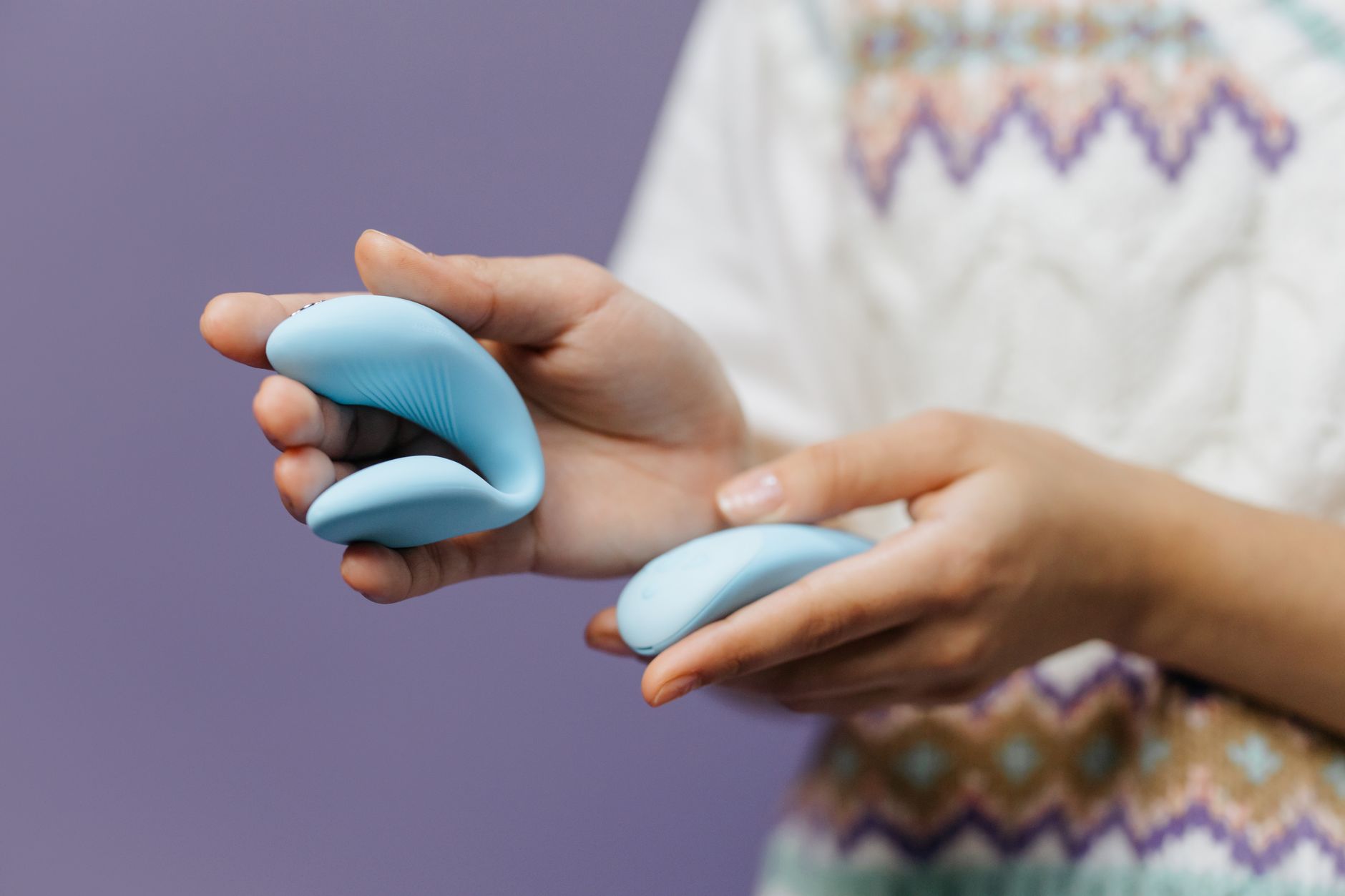
How to Use a Lemon Vibrator When Hormones Shift During Perimenopause
Perimenstrual syndrome is not menopause yet, but your body knows something is happening. Estrogen and progesterone are swinging wildly, sometimes within the same week. Your cycle might be 21 days one month and 45 days the next. And somewhere in that chaos, you're trying to figure out why orgasms feel harder to reach, or why sensation feels different month to month.
Here's the thing nobody tells you: perimenopause is not a stable hormonal state. It's years of transition. And pleasure doesn't disappear during this time. It just changes the rules.
What perimenopause actually does to arousal
Progesterone, estrogen, and testosterone all fluctuate during perimenopause. None of this is linear. Early in your cycle, estrogen surges and arousal often feels easier. Mid-cycle, progesterone rises and many people report decreased interest in sex. Then the whole thing swings again. Some people go through this shift two or three times in a single month.
Estrogen affects blood flow to genital tissue, natural lubrication, and how quickly your nervous system responds to touch. When estrogen dips, arousal takes longer to build. Sensation can feel muted. You might need more direct stimulation to reach the same level of sensation you used to feel with lighter touch. This is not broken. This is your body adjusting.
There's also the emotional layer. Perimenopause often brings sleep disruption, mood shifts, and joint pain. Feeling physically uncomfortable makes arousal harder. Brain fog makes staying present harder. It's not just hormones. It's the cumulative weight of a body that's signaling change.
The good news: your nervous system is still intact. Your clitoris still has the same number of nerve endings. Your capacity for orgasm hasn't changed. The pathway there has just widened a bit.
Why sensation feels inconsistent across your cycle
If you've been tracking your pleasure, you might notice it's not random. There's usually a pattern. Days 7 to 10 of your cycle, when estrogen is climbing, most people report easier arousal and more intense sensation. Days 19 to 23, when progesterone is high, arousal often feels sluggish. Your body is doing exactly what it's supposed to do.
This matters because it means you can plan around it. If you know day 8 is usually your "yes, let's go" day, you can adjust your expectations and pacing on day 20. You can use different tools, different intensity levels, and different timing depending on where you are in your cycle.
A lemon clitoral vibrator becomes especially useful here because you can adjust intensity on the fly. You don't have to commit to one pattern or pressure. You start low and move up as your body tells you what it needs that day.
How to adjust your lemon vibrator technique across your cycle
During the follicular phase, when estrogen is rising and arousal feels easier, you might start at pattern 3 or 4 on your lem vibrator and stay there. Your body gives you faster feedback. Tissue is more responsive. Lubrication usually comes more easily.
During the luteal phase, when progesterone dominates and arousal feels slower, start lower. Pattern 1 or 2. Use water-based lubricant even if you haven't needed it before in your cycle. Budget 20 to 30 minutes instead of 10. Your body isn't broken. It's just asking for more runway.
The beauty of a lemon sexual toy is the suction mechanism works with your tissue sensitivity, not against it. As your tissue changes thickness and responsiveness through your cycle, suction stimulation adapts. You're not applying the same mechanical pressure every time. The sensation is responsive to your body's state.
If numbness shows up mid-cycle, don't push harder. That usually makes things worse. Instead, try a different pattern. Something with faster pulses, or longer builds. The lemon clitoral vibrator has enough pattern variety that you can shift approach without switching tools.
Managing lubrication changes through perimenopause
Early in perimenopause, your natural lubrication might still follow a cycle. Days around ovulation usually feel wetter. Days in the luteal phase might feel drier. It's normal. But as perimenopause deepens, some people notice vaginal dryness creeping in earlier and lasting longer.
Water-based lubricant is your friend here. Not because something is wrong with your body, but because it makes the lemon vibrator experience feel better. Thinner, more reactive tissue benefits from the glide that lube provides. You're not fixing a problem. You're supporting what your body needs.
One note: if you're noticing dryness that feels uncomfortable even outside of sex, that might be early genitourinary syndrome. Talk to your doctor. There are treatments. But for the perimenopause timeline, where things are shifting but not yet at full atrophy, lube and a responsive tool like a lemon sucker will get you there.
The mental game during hormonal chaos
Peripause is weird because your body changes month to month, but your mind is often somewhere else entirely. You're dealing with sleep disruption. Maybe your job is stressful. Maybe your kids are home or just left. Maybe you're processing a relationship change. All of this affects desire more than the hormones do sometimes.
One thing that helps: separating the conversation. "My arousal timeline has changed" is a different topic than "I'm feeling overwhelmed." You can address them both, but trying to solve them in the same conversation usually fails. If your partner is involved, the conversation about hormonal changes happens separately from the conversation about reconnecting.
For solo exploration, the shift can actually be liberating. You get to discover what your body needs right now, in this phase. Not what it needed at 25. Not what worked three months ago. What works today.
When to loop in a doctor
If you're experiencing pain during arousal, or if dryness is making things uncomfortable in daily life, talk to someone. Vaginal estrogen cream can help significantly. It's not systemic hormone replacement. It works locally and makes tissue more resilient.
If your cycle has become completely irregular, or if you're having other symptoms that are affecting quality of life, your GP can help you understand what's happening and what options exist. Perimenopause looks different for everyone.
Most of the time, though, what you're experiencing is just biology. Your body is transitioning. A lemon vibrator adapts with you. You adjust technique. You use lube. And you keep going.
FAQ: Lemon Vibrators and Perimenopause
Can I use the same vibrator settings throughout my cycle?
Technically, yes. But you'll probably get better results adjusting. Start lower during your luteal phase. Go higher during your follicular phase. Your body sends different signals depending on where you are hormonally. The lemon vibrator's pattern range lets you match that, rather than fighting it.
Does hormonal birth control make perimenopause easier or harder?
Birth control during perimenopause is complicated. Some people feel much better. Others find it extends perimenopause symptoms. It depends on the formulation and your individual response. If you're on hormonal birth control and things feel off, talk to your prescriber. Switching formulations sometimes helps.
Will perimenopause orgasms feel the same as they used to?
Maybe not exactly. Some people report that orgasms feel more localized. Some feel more full-body. Some feel more intense. The variation is actually pretty common and usually resolves once hormones stabilize. For now, a lemon clitoral vibrator can help you explore what sensation feels good in this phase.
Is it normal to have no interest in sex some weeks and high interest others?
Completely normal. Progesterone suppresses desire. Estrogen tends to amplify it. During perimenopause, that swing is exaggerated. It's not a sign something is wrong with you or your relationship. It's hormones doing what hormones do.
Should I be using lubricant if I'm not having natural lubrication issues yet?
Yes. Even if natural lubrication feels fine mid-cycle, adding water-based lubricant during low-lubrication phases makes a lemon vibrator feel smoother and more comfortable. You're not treating a problem. You're optimizing sensation.
Does the lemon vibrator work if my arousal takes much longer now?
Absolutely. The suction mechanism of a lemon clitoral vibrator builds sensation gradually. It's not an all-or-nothing tool. You can use pattern 1 for 10 minutes while arousal builds, then shift up as your body responds. That gradual ramp works beautifully when arousal is slower.
What's actually happening beneath the surface
Peripause is not a disorder. It's a biological transition. Your body is entering a new phase. Pleasure doesn't end. The script just gets rewritten.
What helps most is curiosity instead of frustration. Your arousal timeline changed. Okay. What does it need now? Longer warm-up. Different pressure. Lube. A lemon vibrator set lower. These aren't workarounds. They're just how your body is asking to be touched in this phase.
You have years of perimenopause ahead, not a few weeks. Getting comfortable adjusting your approach now means you're not white-knuckling your way through something that could actually feel good if you shifted how you think about it.
Your pleasure matters in perimenopause just as much as it did before. Sometimes it just asks for a different conversation.
Resources and Further Reading
If you want to go deeper into perimenopause and sexual health, these sources offer evidence-based information:
- North American Menopause Society (NAMS) clinical guidelines on perimenopause
- "The New Rules of Menopause" by Marianne J. Legato, MD
- Podcasts like "The Menopause Podcast" with Diane Danzebrink for lived experience and medical insight
- Cycle tracking apps (Kindara, Inito) if you want to map your own patterns and see what correlates with arousal changes
Your doctor is also a resource. Not all of them are well-trained in perimenopause sexual health, but asking directly can help. "How do hormonal changes affect arousal and what adjustments might help?" is a perfectly valid clinical question.
For questions about the lemon clitoral vibrator specifically, reach out to Get Lems at /contact. We're here to help you figure out what works for your body right now.