
Let's talk about what grief does to desire
Here's the part no one warns you about: grief doesn't just cloud your mind. It reaches into your nervous system and turns down the volume on pleasure signals. You're not broken. You're not doing anything wrong. Your brain is in survival mode, and pleasure is literally a lower priority than processing loss.
When someone you love dies, or when you experience profound loss, your body enters a state of sympathetic activation. The nervous system is scanning for threat. Dopamine drops. The prefrontal cortex (your thinking brain) dims. And the circuits that light up during arousal? They're offline. You might notice desire disappearing entirely, or pleasure feeling distant and muted, like you're watching it happen to someone else.
This is not permanent. But pretending it's not happening won't make it move faster.
Why arousal flatlines after loss
Three neurobiological things happen:
1. Your reward system recalibrates. Dopamine is the neurotransmitter that makes things feel good and worth pursuing. During acute grief, dopamine plummets. This isn't depression necessarily (though grief and depression can overlap). It's your brain's way of saying: right now, survival and processing are the priority. Pleasure feels frivolous or even guilty.
2. The vagus nerve tightens. Your vagus nerve is the master controller of your parasympathetic nervous system (the rest-and-digest state where arousal happens). Grief keeps the nervous system in a protective crouch. Your body won't relax enough for desire to build.
3. Desire gets tangled with obligation. After loss, sex can feel like you're betraying the person who died, or moving on too fast, or being disrespectful to the seriousness of what happened. Even if intellectually you know that's not rational, the emotional weight makes arousal feel complicated.
The grief timeline nobody talks about
Arousal typically returns in phases, not linearly.
In the first weeks to months, expect nothing. Your body is in acute crisis response. If pleasure appears, great, don't push it away. But if it doesn't, that's completely normal and not a sign you're damaged.
Around three to six months, some people report moments of returning sensation. A partner's touch feels good again. A thought makes you smile. These aren't signs you're "over it." They're signs your nervous system is beginning to regulate.
After six to twelve months, pleasure often becomes more accessible, though still interrupted. You might have days where desire is present and days where it vanishes again. This is grief being nonlinear, not you failing.
Anywhere from one to three years onward, arousal usually stabilizes into a new normal. It can coexist with ongoing grief.
How a lemon clitoral vibrator fits into this
A lemon vibrator (or any gentle clitoral suction toy) is useful after grief not because it fixes anything, but because it creates a low-pressure pathway back to sensation. Here's why it matters:
Suction doesn't require performance. Unlike vibration, which demands your body to keep up with a rhythm, suction is passive. You rest against it and it does the work. After grief, when energy is scarce, this matters.
It bypasses goal-oriented thinking. Grief-affected arousal can feel task-like. "I should want this. Why don't I want this?" A lemon vibrator helps because the sensation is interesting enough to pull attention away from the performance narrative.
It's gentle enough for nervous system healing. If your parasympathetic nervous system is still wary, the soft pulse of a lemon clitoral vibrator won't feel like an assault on your senses. You can start on the lowest pattern and adjust up.
Sensation rebuilds dopamine pathways. Pleasure isn't the goal when you're grieving. But gentle sensation helps your brain remember that good feelings are possible. That's the real work.
How to actually use one when grief is present
First: get permission from yourself. Grief makes pleasure feel guilty. You might think: if I'm having pleasure, does that mean I didn't really love them? Or I'm moving on too fast? Your pleasure and your love are separate things. One doesn't negate the other. Pleasure is not betrayal.
Second: don't set expectations. You're not trying to orgasm. You're not trying to feel aroused. You're exploring whether sensation feels good right now. That's it. If it feels good for thirty seconds and then you want to stop, that's a win.
Third: create a contained time. Pick a moment when you know you won't be interrupted. Ten or fifteen minutes. Not in bed with a partner (unless they understand you're experimenting, not performing). Solo time first, so there's zero pressure to respond a certain way.
Fourth: start at pattern one or two. On a lemon vibrator or any clitoral suction toy, the gentlest setting is usually enough. Let your body adjust to sensation before you crank it up.
Fifth: pay attention without judgment. What does the feeling remind you of? Does it feel tense, or relaxed? Are you holding your breath? These details aren't good or bad. They're information about where your nervous system is.
When to pause
If pleasure triggers sadness, stop. You're not failing. You're finding a nerve. Your body is telling you something important: this part of you is still processing. That's okay. Come back another day.
If you feel nothing and that feels disappointing, pause too. Disappointment is its own form of grief. Let it be there without trying to push past it.
If using a lemon vibrator or any adult toy feels connected to guilt, consider talking to a grief counselor or a therapist who specializes in bereavement. Grief and pleasure can coexist, but if the guilt is overwhelming, you might need support untangling those emotions.
What rebuilding actually looks like
After loss, pleasure doesn't return all at once. It comes back in moments, then phases, then spans of time. You might notice one day that you're genuinely curious about touch again. Another day you'll feel completely shut down and wonder if you've gone backward.
You haven't. Grief healing isn't linear. Your capacity for pleasure will rebuild alongside your capacity to live with the loss. They're not competing. They're both part of moving forward while honoring what you've lost.
If you have a partner, let them know you're exploring this slowly. Let them know that needing a lemon vibrator or other clitoral vibrator doesn't mean anything about them or the relationship. It means you're gently reconnecting with yourself. That's always welcome.
Your pleasure matters. Not instead of your grief. Alongside it.
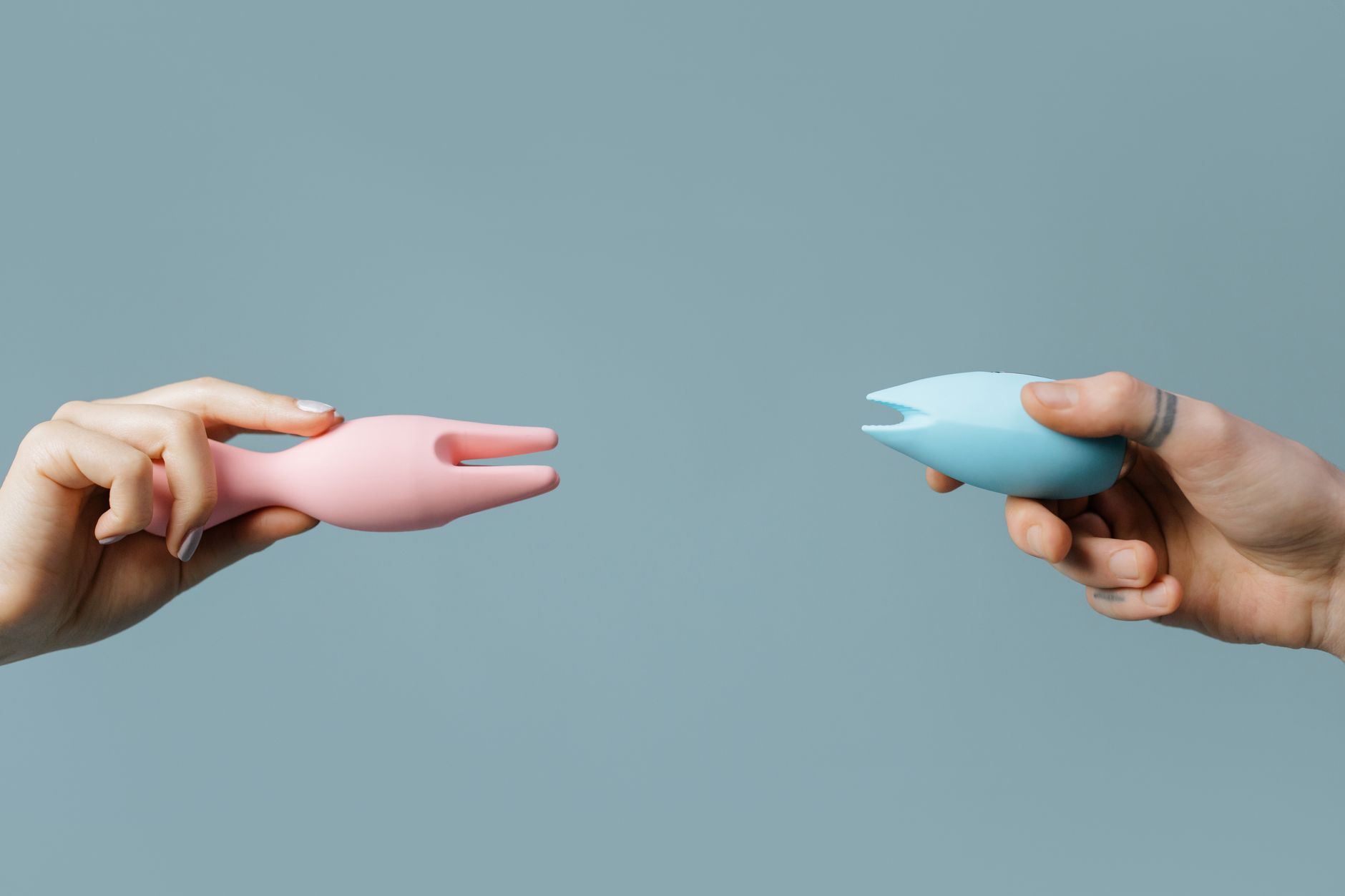
Photo by cottonbro studio on Pexels
FAQ: Grief, arousal, and getting started
Can I use a lemon clitoral vibrator while I'm in active grief?
Yes, but with no expectations. Active grief means your nervous system is in high alert. If sensation feels good, use it. If it doesn't, wait. There's no timeline. Some people find gentle touch grounding early in grief. Others need months before sensation feels safe. Both are normal.
Does using a lemon vibrator mean I'm moving on too fast?
No. Pleasure and grief are separate. You can feel both at the same time. Using a clitoral vibrator for gentle sensation doesn't mean you've stopped grieving or that you loved the person less. It means you're slowly reconnecting with your body while your emotions process loss.
I feel guilty when I experience pleasure. Is that normal?
Completely normal. Grief often comes with a weird moral weight. Like if you're happy or aroused, you're betraying the person who died. That's the grief talking, not reality. Your pleasure and their memory can coexist. A grief counselor can help untangle that guilt if it's blocking you.
How long until arousal comes back after loss?
There's no universal timeline. Some people report returning sensation around three to six months. For others it takes a year or more. Acute grief affects everyone differently. What matters is not rushing it. Your body will signal when it's ready, and a gentle lemon vibrator can help you notice those signals.
What if I use the vibrator and it triggers sadness or crying?
Stop, and that's completely okay. You've found a tender place. Your body is processing something. Come back when you're ready, or don't. Sadness during pleasure reconnection is information, not failure. If this happens repeatedly, talking to a therapist might help.
Can my partner help me reconnect to pleasure after loss?
Only if it feels safe and you're interested. Some people want solo exploration first. Others want their partner present but not involved directly. Talk about what you need before you start. And know that your partner may also be grieving, so if you and your partner are both processing loss together, your needs might not always align. That's why separate conversations about pleasure and about your relationship matter.
Reconnecting takes time and gentleness
Grief rewires your nervous system temporarily. It also teaches you that your body is wise. It shuts down pleasure when processing is the priority. It rebuilds connection when healing begins. A lemon vibrator or any clitoral toy is just a tool for listening to what your body is ready for.
If you're navigating pleasure after loss and feel stuck, consider reaching out for professional support. A grief counselor or sex therapist who understands bereavement can help you untangle the guilt and reconnect at your own pace.
Your pleasure matters. Your grief matters. Both are part of being alive.