Here's what actually happens
Arousal doesn't disappear with age. It shifts. That distinction is everything because most conversations about desire and aging split into either "you'll feel like you did at 25" or "this part of your life is over." Neither is true, and both miss what's actually valuable.
In my two decades working with couples, I've seen this pattern repeat: people expect their body to work at 45 or 55 the same way it did at 25. When it doesn't, they assume something's broken. It's not. Your nervous system is just operating on different parameters now.
What changes physiologically
Blood flow to the genitals takes longer to establish. Lubrication builds more gradually. The pelvic floor muscles that helped generate sensation in your younger years lose some elasticity and tone. Neurologically, the signals from clitoral tissue still reach your brain, but the cascade takes a different route. None of this stops pleasure. It just resets the timeline.
That slower timeline is actually a feature, not a bug. Here's why.
Why longer arousal can feel better
When arousal builds quickly, your nervous system is in a particular gear. Fast, reactive, goal-oriented. When it builds slowly, you have time to inhabit the experience. Your brain isn't racing ahead to orgasm. You're actually here, in your body, noticing texture and pressure and the specific angle that makes your breath catch.
Many people describe post-40 or post-50 pleasure as deeper and more resonant. They're not being polite. They're describing what happens when your body forces you to slow down. Slow isn't a compromise. It's often the better version.
Why a lemon vibrator changes the equation
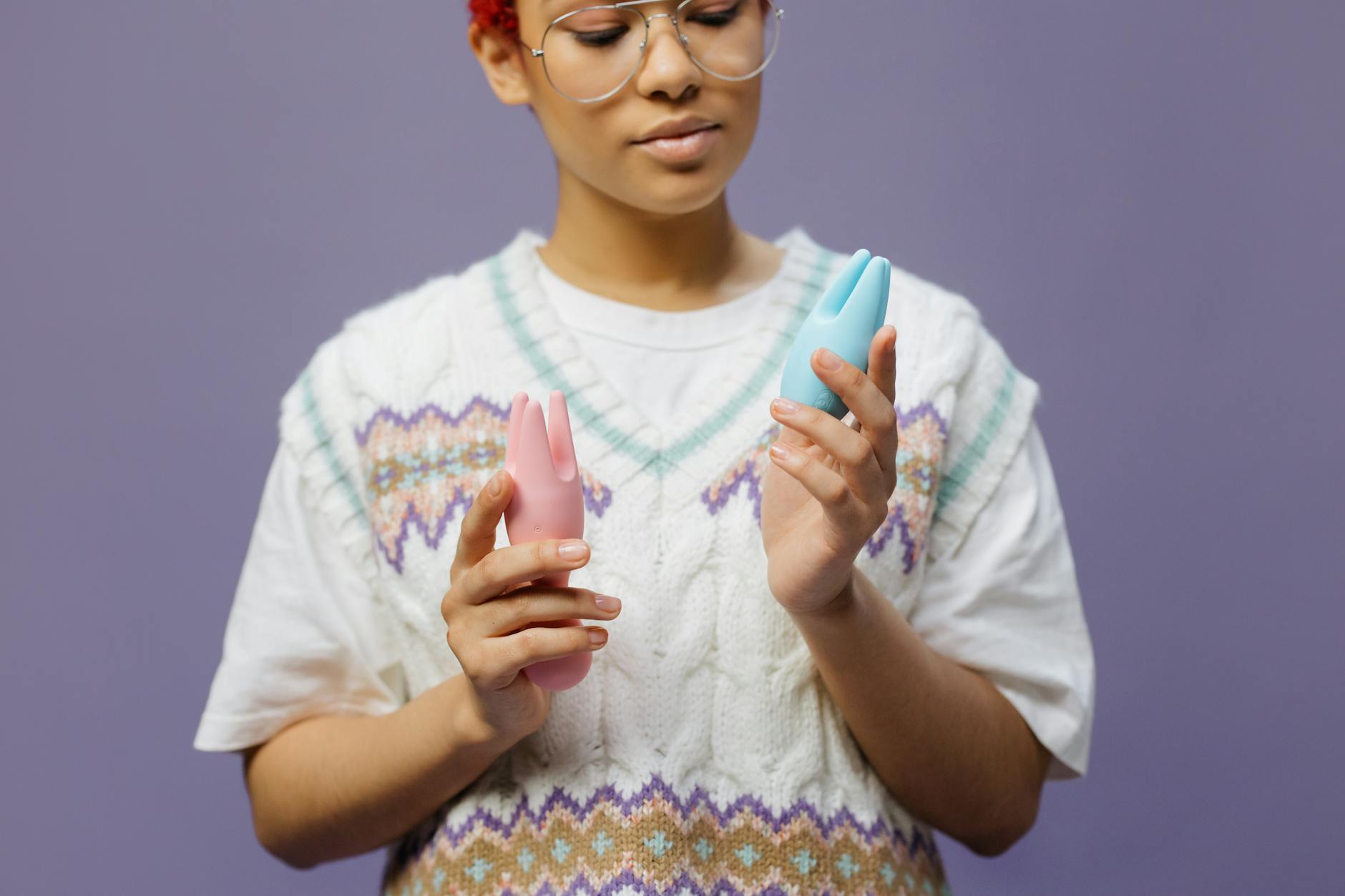
A lemon clitoral vibrator works differently than a traditional vibrator. Instead of buzz, it uses air-pulse technology, which creates a gentle suction sensation. That matters enormously when arousal is building slowly, because air-pulse doesn't require the same immediate physiological response that vibration does.
Vibration demands quick blood flow and rapid nerve firing. Air-pulse draws blood gradually and rewards patience. The Lem, specifically, operates at frequencies that encourage a build rather than a jolt. You start at a lower setting and can stay there for 20 or 30 minutes without fatigue, letting arousal deepen naturally.
With traditional vibrators, many people in their 40s and beyond find that they need to start at moderate or high settings to feel anything, which can exhaust the experience before sensation actually peaks. A lemon sucker approach lets you meet your body where it is now, not force it to perform like it did before.
The timing shift: what to expect
Budget differently. If arousal used to take 5 or 10 minutes, you're probably looking at 15 to 25 minutes now. That's not a malfunction. That's the actual timeline for your body right now. Fighting it creates frustration. Accepting it creates space for something richer.
Start with the Lem on pattern 1 or 2. Spend 5 to 10 minutes exploring that setting. Notice what shifts. Let your breathing change. Feel where sensation concentrates. Only move to a higher pattern if the current one has stopped building. Often it hasn't. Often you just haven't given it enough time.
The role of context
Arousal after 40 is more contextual than arousal at 25. At 25, arousal can appear almost independently of circumstance. After 40, your nervous system needs permission. It needs your brain to be actually interested, not just your genitals to be available.
This means your environment matters more. It's not shallow or unromantic to need quiet, comfort, and time without interruption. Your nervous system needs that signal that this is safe, important, and worth the energy. A lemon clitoral vibrator works best when you're not simultaneously monitoring whether anyone can hear you or checking your phone.
If you're with a partner, frame this as a change in conditions, not a change in desire. "I need about 20 minutes of focus time" is different from "I'm not interested anymore." The first is accurate. The second is a misinterpretation.
Common mistakes that kill the experience
Starting too high. Your instinct might be to jump to setting 3 or 4 because you remember that intensity from before. Your tissue can't sustain that pace. You'll either numb out or irritate yourself. Start lower. Stay there longer. Escalate only if sensation has plateaued.
Rushing the process. The goal is not to orgasm in 5 minutes. The goal is to actually experience pleasure. If you're checking the clock or performing for someone, your nervous system won't cooperate. It knows you're not actually here.
Neglecting the warm-up. Without hormones flooding your system the way they did when you were younger, foreplay or self-touch becomes essential. Spend time on your body before you introduce the Lem. Let your hands and breath and attention do the first part of the work.
Assuming lubrication will arrive on its own. It might, but not necessarily. A water-based lube is your ally now, not a sign of dysfunction. The Lem works brilliantly with lubrication and can feel harsh without it.
What partners need to understand
If you're in a relationship, your partner's role changes slightly. Faster arousal is harder to meet in real time. Slower arousal gives everyone room to participate more meaningfully. Some couples find that when the partner slows down too, the entire experience becomes more connected.
This isn't permission to check out. It's an invitation to be more present. If you're experiencing slower arousal and your partner is present, involve them in the rhythm. Let them use the Lem on you. Let them touch you while you use it. The extra input often accelerates sensation, but only if they're actually engaged, not just waiting for you to finish.
Hormonal shifts and what to expect
If you're in perimenopause or menopause, arousal changes accelerate. Estrogen's role in blood flow becomes obvious when it drops. This is temporary and manageable. It's also the moment when a lemon clitoral vibrator often shifts from "nice option" to "game changer." The air-pulse approach genuinely helps when hormonal support is lower.
If you're on antidepressants or other medications that affect arousal, the timeline stretches further. This is worth naming directly with a prescribing doctor. Many people find that pairing medication with a more deliberate pleasure practice actually improves outcomes. The medication requires you to slow down. Slowing down with intention is different from slowing down in defeat.
The version of pleasure that opens up
Arousal that takes 20 minutes instead of 5 is not lesser. It's different. It requires more presence and less autopilot. For many people, that trade is extraordinarily worthwhile. Your orgasms might be fewer, but they're often fuller. Your experience of sensation is heightened by attention rather than diminished by time.
A lemon vibrator meets this reality with grace. It doesn't try to force your body into a younger gear. It works with what you have now, and in most cases, it reveals that what you have now is plenty.
People also ask
How long should arousal actually take at my age?
There's no universal timeline, but if you're over 40, 15 to 25 minutes is completely normal. Some people find it takes 30 or 40 minutes. That's not unusual. The real question isn't how long it "should" take, but whether you're allowing it to take that long without judgment. Once you accept the timeline, the experience often improves dramatically.
Will a lemon clitoral vibrator speed things up?
No, and that's actually good. What it does is make the slower timeline feel more satisfying. The air-pulse sensation encourages deeper blood flow and more sustained pleasure than vibration, so even though the timeline is the same length, the quality of sensation often improves significantly.
What if I'm with a partner who gets impatient?
That's a conversation, not a vibrator problem. A slow arousal timeline only works in relationships where both people understand it as normal and valuable. If your partner is frustrated, the issue isn't your body. It's the dynamic between you. A marriage and family coach or sex therapist can help reframe this as connection time rather than performance pressure.
Does lubrication matter more when arousal is slow?
Yes. When blood flow takes longer to establish, natural lubrication also takes longer. A water-based lube bridges that gap and often makes the entire experience feel more comfortable and responsive. This isn't a sign of aging. It's a practical adjustment.
Can medication affect how quickly arousal builds?
Absolutely. Antidepressants, blood pressure medications, and hormonal contraceptives can all extend arousal timelines. This is worth discussing with your prescriber. Many options exist. Some medications affect arousal less than others. You don't have to accept a flattened experience as the trade-off for mental health or physical health.
Is slower arousal permanent?
It depends on what's causing it. Hormonal changes, medication effects, and natural aging are usually consistent. Stress, relationship disconnection, and burnout can also slow arousal and are often reversible. If your timeline shifted suddenly rather than gradually, it might be worth exploring what changed in your life, not just your body.
The bottom line
Arousal that takes longer isn't arousal that's weaker. It's arousal that's different. A lemon sexual toy designed for slow, sustained sensation meets that difference with remarkable grace. The goal isn't to get back to 25. It's to discover what 45 or 55 or 65 actually feels like when you stop fighting it and start exploring it.
Your body isn't broken. It's evolved. A lemon clitoral vibrator helps you work with that evolution rather than against it. And honestly, that's when things get interesting.
If you're navigating arousal changes and feeling disconnected from your partner, consider reaching out for support. A relationship coach can help you both understand these shifts as normal and navigable. Get in touch at contact to learn more.