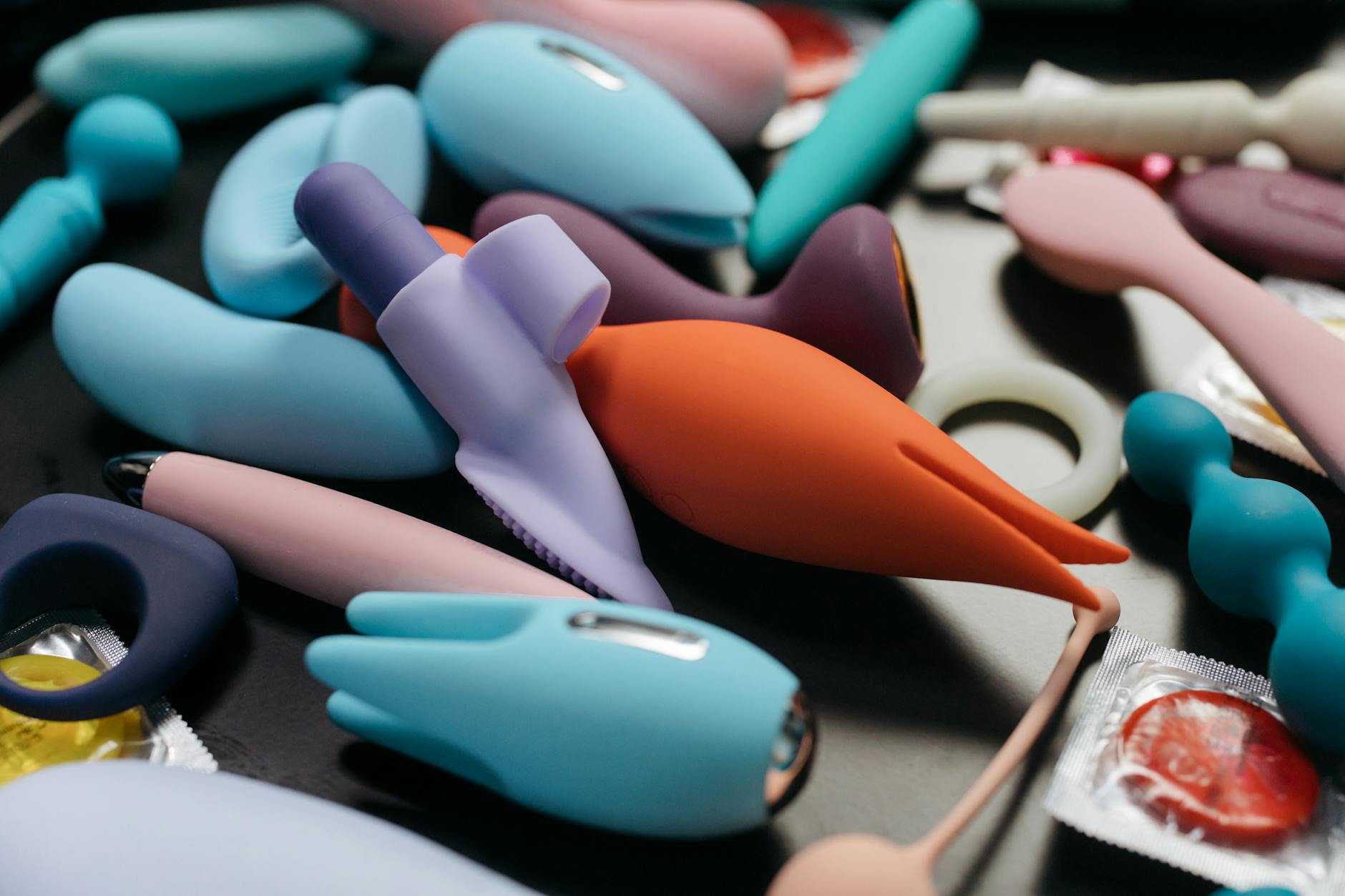
Here's what nobody tells you about your first vibrator
You're not starting from broken. You're starting from curious. There's a massive difference, and it shapes everything about how you approach this.
Most people come to a lemon vibrator or any clitoral vibrator because something's not working the way they expected. Maybe orgasms have never happened. Maybe they used to happen and stopped. Maybe they happen, but the lead-up feels like a chore. Whatever the reason, the anxiety of "will this work for me" can eclipse the actual pleasure part. That anxiety is the first thing we need to move.
Why lemon vibrators are specifically good for learning
A lemon clitoral vibrator works differently than fingers or penetration. It's not pressure-based stimulation. It's suction and micro-vibrations that engage nerve endings directly without requiring your body to build arousal from scratch through friction. That matters because it takes the guesswork out of the equation.
When you're learning to orgasm for the first time, or relearning after years of numbness, you need a tool that doesn't depend on your partner's timing, your body's responsiveness on any given day, or your brain's ability to "relax and let it happen." A lem vibrator gives you control over speed, duration, and intensity. That control is what transforms "I'm not sure this will work" into "Oh, I see how this works."
Many people report that clitoral vibrators are the first thing that's made orgasm feel physically possible rather than aspirational. That's not a failing on your body's part. It's evidence that the tool matters.
Step one: Solo first
I recommend every first experience with a lemon vibrator happens alone. Not because there's shame in partnered exploration, but because you need to know your own response before you're performing for someone else.
Set an hour aside. Not five minutes between other tasks. A full hour where you're not monitoring time and you're not worried about being interrupted. Charge the vibrator fully first. Dead batteries are the enemy of pleasure.
Start with your clothes on if that feels right. Seriously. Sit on the couch, lie in bed, find a comfortable position that doesn't tense your legs or hips. The goal today is not orgasm. The goal is to notice sensation without judgment.
Turn the vibrator on at the lowest setting. Yes, lowest. Hold it against your clitoris through your underwear or jeans. You're looking for what "low vibration" actually feels like on your body. Some people feel it immediately. Some people feel almost nothing at first. Both are fine.
Building sensation over time, not in one session
This part matters more than any other section. Orgasm building through clitoral vibrators is not a one-night breakthrough. It's a process that typically takes 3 to 7 sessions before your body figures out the signal it's receiving.
In session one: wear clothes, low setting, 5 to 10 minutes. Notice what you feel.
In session two: same setup, but let yourself pay attention to whether you want to move toward higher intensity or stay low. Your body will answer that question if you listen. No judgment. If low feels good, stay low.
In session three and four: remove underwear or pants if you want to. You're looking for direct contact now. You'll notice the vibration changes completely without the fabric barrier. Again, lowest setting first. Many people need to go slower here than they expect.
Sessions five through seven: this is where sensation often starts stacking. Your nervous system has received the signal enough times that it starts to recognize the pattern. Arousal begins building faster. Wetness appears. The desire to try higher settings shows up naturally.
The reason this matters: if you charge into a lemon vibrator session on high setting expecting an orgasm, your nervous system doesn't recognize the signal as pleasure. It reads it as overstimulation. You feel nothing or too much. You think the tool doesn't work for you. You quit. And I've watched that cycle happen with hundreds of people who just needed five minutes on the lowest setting with no pressure.
What to expect somatically
As you progress through sessions, your body will send signals. Learn to read them.
Low-level sensation: tingling, mild pressure, curiosity. You might feel "warm" without arousal. That's normal. You're training your nervous system to pay attention.
Mid-level response: wetness appears. You notice your breathing changing. Muscles start relaxing instead of tensing. Your brain gets quieter. This is your nervous system recognizing pleasure. It's usually the turning point.
Building toward orgasm: continued intensity on settings that are working, longer sessions (15 to 25 minutes instead of 5 to 10), and your mind goes quiet except for basic sensation. Your pelvic floor might tighten involuntarily. Your hips might move. Your breathing gets shallow. This is all your body doing what it's built to do when it recognizes pleasure.
Orgasm itself: People describe it wildly differently. Some say a wave. Some say fireworks. Some say a sudden muscle release followed by waves. Some describe numbness for a few seconds then clarity. If you feel a sudden release of tension, muscle contractions, or a sense of relief, that's likely it. Your first orgasm with a vibrator might not feel like you expected. That doesn't mean it's not real.
The lubricant factor
At session three or four, when you move to direct contact, introduce lubricant. Water-based is your friend. Silicone lube works too, but it's harder to clean off silicone toys.
Don't wait for your body to produce enough wetness. Arousal wetness and lubricant are not the same thing. Lubricant lets you feel vibration more clearly because there's less friction. Wetness without lubricant can actually muffle the sensation you're trying to feel.
A dime-sized amount is a good start. You can add more if you want to. The goal is comfortable contact without pressure.
Common speed mistakes people make
Most people assume "higher setting equals faster orgasm." It's the opposite.
A lemon clitoral vibrator on setting three with 20 minutes of dedicated attention will produce results far more consistently than setting eight for three minutes. Your nervous system needs time to recognize the signal and build arousal. Jumping to high intensity too fast is like trying to run a sprint before you've warmed up.
Once you're past the first few sessions and arousal is building more quickly, you can experiment with speed escalation. Start at two, spend five minutes there, move to three, spend another five minutes, then escalate if it feels good. This gives your nervous system a gradual climb toward orgasm.
The intensity that produces your first orgasm is rarely the highest intensity available. It's the one that feels right for your body's response that day.
What happens if you don't orgasm in the first seven sessions
You're not broken. Orgasm building sometimes takes 10 to 15 sessions. Some bodies need even longer. That's not failure. That's a nervous system that needs time to recognize the signal.
If you're past session seven and noticing no change, check three things. First: are you actually relaxed, or are you performance-focused? Tension stops pleasure. Second: are you using enough lubricant? Friction without adequate lubrication muffles sensation. Third: are you using the lowest effective setting, or are you pushing to higher speeds too fast?
If all three check out and you're still not seeing progress after 15 sessions, it might be worth talking to a therapist or healthcare provider. Sometimes blocks around pleasure run deeper than technique, and that's worth exploring with support.
Bringing a partner in once you know your own response
Once you've had a few solo sessions and you understand what sensation feels like for your body, introducing a partner is different. They can hold the vibrator. They can explore patterns and speeds with you. They can notice what makes you breathe differently.
But here's the key: the first partner session should be built on what you already know works. You tell them "try setting two, this is what I've noticed," rather than handing them the tool and hoping they guess.
Many couples find that partnered use of a lemon vibrator brings communication back into sex that's been absent for years. You're narrating your own pleasure. Your partner is witnessing it. You're not performing for them. You're describing what's real.
FAQ
How long should I wait between sessions if I'm building orgasm?
Every other day is ideal. Your nervous system needs time to process the signal. Back-to-back sessions don't accelerate learning. They usually build frustration instead.
Can I use a lemon vibrator if I've had vaginismus or past sexual trauma?
Maybe. It depends on where your nervous system is in healing. Start with the vibrator in the same room but not touching your body. Let your nervous system get used to its presence. When that feels neutral, hold it. When that feels okay, wear clothes and turn it on low. Move at your pace. Many people with trauma histories find that a lem vibrator gives them back agency because they control every variable. But you might benefit from working with a somatic therapist or sex therapist alongside this exploration. That's not weakness. That's wisdom.
What if I feel nothing at the lowest setting?
Turn it off. Take a break. Many people feel nothing the first few times. That doesn't mean the vibrator won't work for you eventually. Your nervous system is still learning. Come back tomorrow or the next day. If you try five or six times over two weeks and still feel absolutely nothing, it's possible the lowest setting is so subtle that your body doesn't register it. In that case, try setting two or three. You're looking for the threshold where you feel something. Once you find it, you've got your starting point.
Can I use this method if I'm on antidepressants that affect sensation?
Yes. Antidepressants often numb arousal and orgasm. A lemon clitoral vibrator can bypass some of that numbness because it's using a different pathway than sensation you're usually relying on. But it might take 10 to 15 sessions instead of five. Patience matters more. Some people also find that having this conversation with their prescriber is helpful. There are sometimes timing or dosage adjustments that can help without losing the mental health benefits of the medication.
Do I need to have a specific body type or anatomy for a lem vibrator to work?
No. Clitoral anatomy varies wildly. The clitoris itself has thousands of nerve endings regardless of external size or shape. A lemon clitoral vibrator works because it targets those nerves through suction and vibration, not through penetration or shape fit. If your clitoris is internal, you'll need to find it first. If it's more external, you'll find the sweet spot faster. Both work.
Is there a wrong time to start learning with a lemon vibrator?
If you're in acute stress, grief, or a relationship crisis, your nervous system is not primed for pleasure. You can still explore if you want to, but don't be surprised if sensation feels distant. Pleasure requires a baseline of safety. If you're not safe, your body won't cooperate. That's not broken. That's protective. Address the safety question first.
What happens next
Once you've experienced orgasm with a lemon vibrator, most people ask: "Now what?" The answer is you get to explore. Different settings. Different durations. Different positions. Different times of day. Different fantasies.
You also get to decide whether this tool stays part of your pleasure solo or whether you want to integrate it with a partner. You get to figure out whether you want a lemon clitoral vibrator as part of ongoing practice or whether you were just gathering information.
The point is you've moved from "I don't know if this is possible" to "I know exactly how my body responds." That's the thing nobody talks about when they talk about vibrators. The real change isn't the orgasm itself. It's the confidence that comes from understanding your own pleasure.